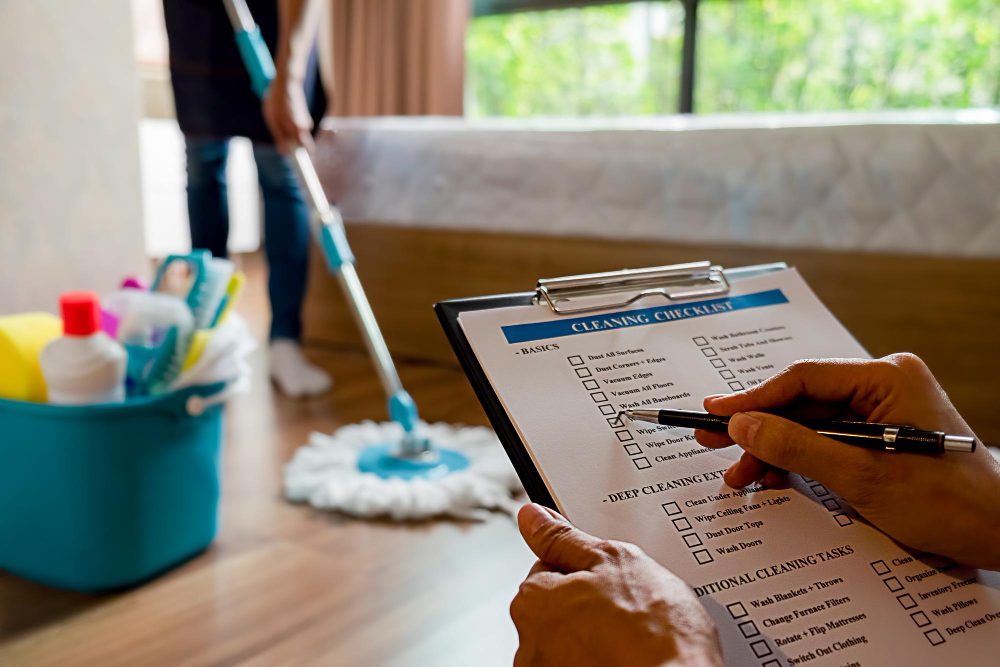
Most renters find out too late that what they considered a thorough clean and what their landlord considers a thorough clean are two very different things. The difference usually shows up as a deduction letter three weeks after handing over the keys.
Understanding exactly what landlords and property managers look for during a move-out inspection, where they find problems, and what Minnesota law says about what they can and cannot charge you for is the difference between getting your full deposit back and losing several hundred dollars.
This guide covers what landlords actually inspect, the cleaning standard required to pass, what Minnesota tenant law protects you from, and when professional move-in/move-out cleaning makes more financial sense than DIY.
What Is Move-Out Cleaning?
Move-out cleaning is a comprehensive cleaning of a rental property conducted before a tenant vacates, intended to return the property to the condition it was in at the start of the tenancy, accounting for normal wear and tear.
It goes significantly further than regular maintenance cleaning. The standard isn’t “clean enough to live in.” It’s “clean enough to pass a property manager’s inspection and be immediately re-rented.”
That’s a meaningfully higher standard, and it includes areas that most tenants have never cleaned during their tenancy: inside every appliance, inside every cabinet, window tracks, baseboards throughout, behind appliances, grout lines, and every corner of every room.
What Minnesota Law Says About Move-Out Cleaning
Understanding your legal rights matters before you do any cleaning.
Minnesota Statute 504B.178 governs security deposit law for residential rentals in Minnesota. The key points:
Landlords have 21 days after you vacate to return your deposit or provide an itemized written statement of deductions. If they miss this deadline, you may be entitled to the full deposit amount regardless of the property’s condition.
Landlords can deduct for cleaning that is necessary to return the property to its move-in condition. They cannot deduct for normal wear and tear.
Normal wear and tear includes: small nail holes from pictures, minor scuffs on walls from furniture, carpet wear in high-traffic areas consistent with normal use, and paint fading from age and sunlight.
Not normal wear and tear includes: grease-coated appliances, mold in bathrooms from poor ventilation habits, stained carpet from spills, crayon or marker on walls, and pets damaging floors or walls.
Your move-in inspection report with photographs is your most important document for any deposit dispute. If you documented the condition at move-in, you have a baseline. If you didn’t, the dispute becomes harder to win.
For comprehensive guidance on Minnesota security deposit rights, the Minnesota Attorney General’s Office publishes a free tenant rights guide that covers deposit disputes in detail.
What Landlords Actually Inspect: The Full List
Property managers who manage multiple units develop a systematic inspection process. Here’s what they check, ordered by where problems most commonly appear.
Kitchen Inspection Points
The kitchen is where most deposit deductions originate. Landlords know this and inspect it carefully.
Inside the oven: This is the most commonly missed item. Even tenants who “cleaned the oven” often miss the door glass interior, the area under the bottom panel, and the area around the broiler. Inspectors open the oven and look.
Refrigerator interior: All shelves, all drawers, the door seals in their creases, and the area under the bottom drawers. Food residue, mold in the seals, and odors are all noted.
Range hood filter: A grease-clogged filter is a fire hazard and a common deduction. If you can’t see light through it, it needs replacing.
Inside all cabinets and drawers: Every shelf and drawer interior. Crumbs, debris, and grease residue in cabinets are consistently cited in move-out inspections.
Under the sink: Evidence of moisture, staining, or debris under the kitchen sink.
Behind and under the refrigerator and stove: Property managers pull appliances out. What’s back there has often been there since the previous tenant.
Sink and faucet: Hard water deposits on faucets, staining in the sink basin, and the condition of the garbage disposal.
Bathroom Inspection Points
Bathrooms are the second most frequent source of deposit deductions.
Grout and tile: Mold or mildew in grout lines, whether from walls, floors, or the tub and shower surround. If it’s dark gray or black rather than the original grout color, it’s noted.
The toilet: Behind and underneath the base, where dust and residue collect. The hinges under the seat. The inside of the tank if the seat is removable.
Caulk condition: Cracked, peeling, or moldy caulk around the tub or shower is noted. In some cases, landlords charge for recaulking even if the crack was preexisting, which is why move-in documentation matters.
Exhaust fan: Whether it was cleaned and whether it’s functioning.
Under the vanity: Evidence of any leaks or staining.
Shower curtain liner: If present, mold or buildup.
All Rooms
Baseboards: Dust accumulation on baseboards throughout the entire unit is consistently noted in professional inspections, especially in corners where dust collects heavily.
Windows: Condition of window sills, window tracks (often filled with debris), and the interior glass. Exterior glass is generally not a tenant responsibility.
Closets: All closet floors, shelves, and rods. Landlords check inside every closet.
Light fixtures: Burned-out bulbs and dirty light covers. Replacing burned-out bulbs before move-out is both easy and expected.
Walls: Beyond normal wear and tear, marks, scuffs from heavy impact, holes larger than a small nail, and staining. Landlords note anything that requires painting beyond normal repainting cycles.
Floors: Carpet staining from spills or pet accidents, hardwood floor scratches beyond normal wear, tile damage.
Entryways: Condition of the front door, door hardware, and any mailbox or storage that was part of the tenancy.
The Move-Out Cleaning Standard: Room by Room
Kitchen Move-Out Checklist
- Inside the oven: full interior including door glass and hidden cavity
- Oven racks: removed, soaked, and scrubbed
- Range hood filter: cleaned or replaced
- Inside the refrigerator: all shelves, drawers, door seals
- Dishwasher interior, filter, and door seal
- Inside all cabinets and drawers, wiped clean
- Sink scrubbed and faucet descaled
- Garbage disposal cleaned
- Countertops thoroughly cleaned including backsplash
- Stovetop: burners, grates, and surrounding surface
- Behind and under the refrigerator
- Floor including under toe kicks and corners
Bathroom Move-Out Checklist
- Toilet: bowl interior, seat and hinges, tank exterior, base and floor around base, behind the toilet
- Shower and tub: all surfaces including grout lines
- Shower glass or doors: soap scum removed
- Showerhead: mineral deposits removed
- Caulk: cleaned and in good condition
- Sink and faucet: basin scrubbed, faucet descaled
- Mirror: streak-free
- Inside medicine cabinet and under-sink cabinet
- Exhaust fan cover cleaned
- Baseboards
- Floor including behind toilet and under vanity
Living Areas and Bedrooms
- All floors: vacuumed and/or mopped throughout
- Inside all closets: shelves, rods, and floor
- Windows: sills, tracks, and interior glass
- Baseboards throughout
- Light fixtures and ceiling fans
- Walls: cleaned of marks within reason
- Door frames and doors
- Light switches and outlet covers
Normal Wear and Tear vs Damage: Know the Difference
This distinction protects you from improper deductions.
Normal wear and tear (landlords cannot charge for this):
- Small nail holes from hanging pictures
- Carpet wear in heavily used areas consistent with the length of tenancy
- Minor scuffs on walls from furniture
- Paint fading, small chips, or yellowing consistent with age
- Light scratches on hardwood floors from normal use
- Worn finishes on doorknobs and cabinet hardware
Damage (landlords can charge for this):
- Large holes in walls
- Carpet staining from spills or pet accidents
- Burns on carpet, countertops, or floors
- Broken fixtures, windows, or doors
- Crayon, marker, or paint on walls
- Pet damage to floors or walls
- Grease-coated oven or appliances
- Mold in bathrooms from inadequate ventilation habits
If a landlord attempts to charge you for something that falls under normal wear and tear, you can dispute the deduction in writing within the timeline specified in Minnesota law.
Professional Move-Out Cleaning vs DIY: The Financial Logic
The financial argument for professional move-out cleaning is straightforward.
If your security deposit is $1,400 (about one month’s rent for a typical Twin Cities apartment), losing it entirely costs you $1,400.
A professional move-out cleaning from SHINENOS for a two-bedroom apartment runs $330 to $495 depending on square footage (see our full pricing below).
The cost of a professional clean is significantly less than partial or full deposit loss. Professional move-out cleaning also gives you documentation. A cleaning company’s service record shows your property manager that the home was professionally cleaned, which carries more weight than your assurance that you cleaned it yourself.
Additionally: moving day is already one of the most stressful days of any transition. Adding a full professional-standard clean of an entire apartment to that day is genuinely difficult to do well. Most people rush through it, miss areas, and receive deductions for things they thought they addressed.
SHINENOS Move-Out Cleaning Pricing
| Home Size (Square Footage) | Move-In/Out Cleaning Price |
|---|---|
| 1 – 700 sqft | $275 |
| 701 – 999 sqft | $302 |
| 1,000 – 1,499 sqft | $330 |
| 1,500 – 1,999 sqft | $412 |
| 2,000 – 2,499 sqft | $495 |
| 2,500 – 2,999 sqft | $550 |
| 3,000 – 3,499 sqft | $605 |
| 3,500 – 3,999 sqft | $660 |
| 4,000 – 4,499 sqft | $715 |
| 4,500 – 4,999 sqft | $770 |
| 5,000 – 5,499 sqft | $825 |
| 5,500 – 5,999 sqft | $880 |
| 6,000 – 6,499 sqft | $935 |
Contact SHINENOS for a quote based on your specific property.
Tips for Maximizing Your Security Deposit Return
Document everything with photos before you leave. Walk through every room, every closet, every appliance. Date-stamped photos are your evidence if any dispute arises.
Request a pre-move-out walkthrough. Many Minnesota landlords will conduct a walkthrough before your final departure and tell you what they’re going to cite. This gives you a chance to address issues before they become deductions.
Compare your documentation to your move-in inspection. If something was already noted at move-in (a stain, a scuff, a plumbing issue), it cannot be charged to you at move-out.
Clean before your move-out photos. Schedule professional cleaning before your final walkthrough so both sets of photos reflect the clean state.
Return every key, access card, and piece of equipment. Missing keys are consistently cited as a deduction.
Schedule cleaning after your belongings are out. Cleaning while furniture is still in the unit leaves missed spots. The most thorough move-out clean happens in an empty space.
SHINENOS Move-Out Cleaning Service Areas
SHINENOS serves the Twin Cities metro for move-in and move-out cleaning, including Minneapolis, Eden Prairie, Edina, Minnetonka, Plymouth, Maple Grove, Wayzata, and Excelsior.
We can also provide recurring cleaning at your new property after you move in.
Frequently Asked Questions
What does move-out cleaning include?
A professional move-out cleaning covers every area a landlord inspects: inside all appliances, inside all cabinets and drawers, grout and tile in bathrooms, baseboards throughout, window tracks and sills, closet interiors, all floors, and all fixtures. It’s a complete clean of the empty property.
How much does move-out cleaning cost in Minnesota?
SHINENOS prices by square footage. A 700 to 999 sqft apartment is $302. A 1,000 to 1,499 sqft apartment is $330. A 1,500 to 1,999 sqft home is $412. See the full pricing table above.
Does my landlord have to accept professional cleaning as satisfactory?
A landlord cannot require you to use a specific cleaning company. However, if the property is cleaned to the standard required in your lease, they cannot make cleaning deductions regardless of whether you hired a professional or did it yourself. A professional cleaning significantly raises the likelihood of meeting that standard.
How long does move-out cleaning take?
A professional team typically completes a standard apartment in two to four hours. Larger homes take longer. Timing varies based on the property’s current condition.
Can I dispute a move-out cleaning charge from my landlord?
Yes. If you have documentation showing the property was cleaned to move-in standard (or that the claimed damage was preexisting), you can dispute the deduction in writing. Minnesota law requires landlords to provide itemized deductions. Unsubstantiated charges can be challenged.
Should I clean before or after handing over the keys?
Clean before the final walkthrough and before returning the keys. Ideally, schedule cleaning after all your belongings are moved out of the property.
What happens if my landlord doesn’t return my deposit within 21 days?
Minnesota law requires landlords to return the deposit or provide an itemized deduction statement within 21 days of the end of the tenancy. If they fail to do so, you may be entitled to the deposit plus damages. Consult the Minnesota Attorney General’s Office or a tenant rights organization if this occurs.
Book Your Move-Out Cleaning Before Moving Day
SHINENOS handles move-out cleaning throughout the Twin Cities metro, covering every item on the inspection checklist that landlords use. We schedule around your moving timeline and can often accommodate short-notice bookings.
Book your move-out cleaning with SHINENOS and move out with confidence.