Carpet can hide a lot more than it shows.
A carpet may look clean after a few passes with a vacuum, yet fine dust, pet hair, tracked-in dirt, food particles, and old spills can settle deeper into the fibers. Over time, the carpet can start to look dull, feel rough in high-traffic areas, or develop odors that regular vacuuming cannot fix.
That does not mean every carpet needs professional cleaning every few weeks. In many homes, a good vacuuming routine and prompt spot treatment are enough for day-to-day maintenance. The question is knowing where DIY cleaning works well, where a carpet cleaning machine helps, and when professional cleaning is worth the time and cost.
This carpet cleaning guide breaks down the basics, including stain treatment, carpet cleaning machines, steam cleaners, drying, pet messes, DIY versus professional cleaning, and the mistakes that can make carpet problems worse.
Why Vacuuming Is Not the Same as Carpet Cleaning
Vacuuming removes loose dirt near the surface. It is essential, but it has limits.
Fine particles can settle into the carpet pile. Oils from skin and outdoor dirt can cling to fibers. Spills can penetrate below the surface. Pet accidents can move deeper into the carpet and padding.
A vacuum is designed to remove dry debris. Carpet cleaning uses moisture, cleaning solutions, agitation, extraction, or another method to remove material that ordinary vacuuming cannot reach.
Think of vacuuming as routine maintenance and deeper carpet cleaning as periodic restoration.
You need both.
How Often Should Carpet Be Cleaned?
There is no single schedule for every household.
A home with two adults, no pets, and low foot traffic may need less frequent professional cleaning than a busy home with children and multiple pets.
Factors that increase the need for deeper cleaning include:
- Pets
- Children
- High foot traffic
- Frequent entertaining
- Allergies or sensitivity to dust
- Shoes worn indoors
- Frequent food and drink spills
- Carpets in entryways and hallways
Vacuuming several times a week in high-traffic homes can slow the buildup. Professional or deep extraction cleaning can then be scheduled based on the carpet’s condition and the manufacturer’s recommendations.
The Basic Carpet Cleaning Routine
A practical routine has four parts:
- Vacuum regularly.
- Treat spills quickly.
- Deep clean when the carpet shows buildup or odor.
- Allow carpet to dry completely after wet cleaning.
The biggest mistake is waiting for a carpet to look extremely dirty before doing anything.
Once soil is heavily embedded, the cleaning job becomes more difficult.
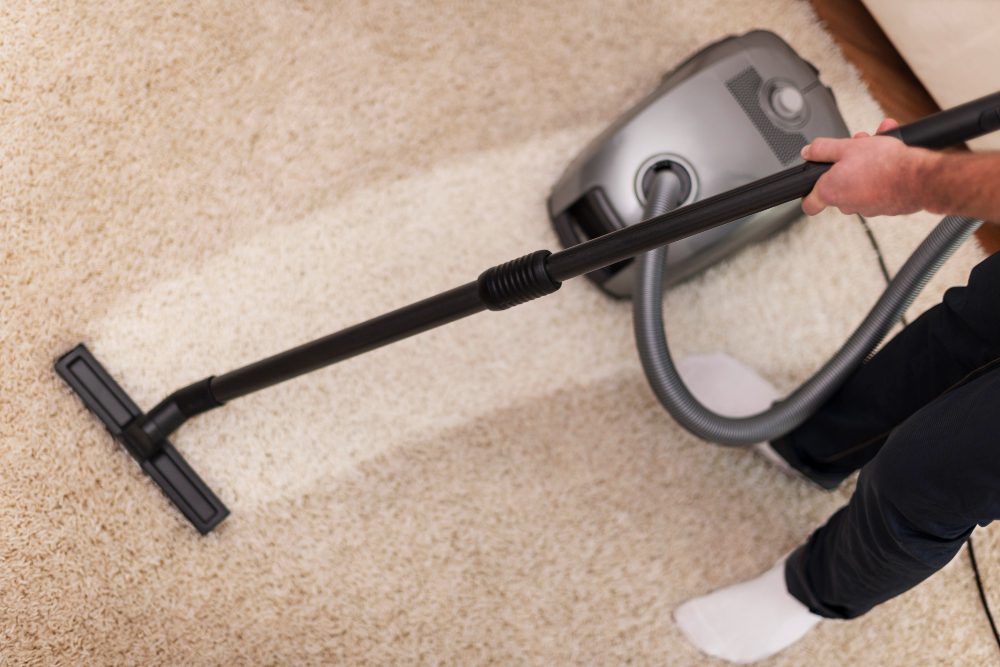
How to Vacuum Carpet Properly
Vacuum slowly rather than racing across the room.
Make overlapping passes so the vacuum has time to lift debris.
Pay extra attention to:
- Entryways
- Hallways
- In front of sofas
- Around dining tables
- Stairs
- Pet sleeping areas
Use the correct attachment for edges and corners.
If your vacuum has height settings, use the setting recommended for your carpet type.
Clean or replace filters and empty the dust container regularly. A clogged vacuum cannot perform at its best.
How to Treat Carpet Stains
The faster you respond to a spill, the better your chances of removing it.
Start by blotting.
Do not aggressively rub a fresh liquid spill into the carpet. Rubbing can spread the stain and work it deeper into the fibers.
Use a clean white or colorfast cloth when possible.
Blot from the outside toward the center so the stain does not spread.
Once most of the liquid is removed, use a carpet-safe spot cleaner according to its instructions.
Always test a cleaning product in an inconspicuous area first.
Common Carpet Stains and What to Do
Coffee
Blot immediately.
Use cool or lukewarm water and a carpet-safe cleaner if needed.
Do not soak the carpet.
Red Wine
Blot as much as possible.
Avoid panic and aggressive scrubbing.
Use a carpet-safe stain treatment designed for the fiber type.
Grease
Grease can be more difficult because it bonds to carpet fibers.
Use a product designed for carpet grease removal and follow the label.
Do not pour large amounts of household degreaser onto carpet.
Mud
Let mud dry if possible.
Once dry, vacuum the loose dirt.
Then treat any remaining discoloration.
Trying to scrub wet mud often pushes it deeper.
Pet Urine
Blot fresh urine immediately.
Use an enzymatic cleaner designed for pet accidents if it is safe for your carpet.
Odor that continues after surface cleaning can indicate that the liquid reached the carpet backing or padding.
In that situation, repeated surface cleaning may not solve the problem.
What Is a Carpet Cleaning Machine?
A carpet cleaning machine sprays cleaning solution into the carpet and extracts dirty water.
Some machines are designed for full-room cleaning. Others are portable spot cleaners intended for small areas.
The machine can be useful when you want to deep clean a maintained carpet without hiring a professional every time.
But machine quality and technique matter.
Too much water, too much cleaning solution, or inadequate extraction can leave carpet wet for too long.
How to Use a Carpet Cleaning Machine
Step 1: Vacuum First
Never skip dry vacuuming.
Loose dirt should be removed before wet cleaning.
Step 2: Move Furniture
Move lightweight furniture where practical.
Protect furniture that remains in the room according to the machine and carpet manufacturer’s recommendations.
Step 3: Pre-Treat Stains
Spot-treat visible stains before running the machine.
Give the product the recommended dwell time.
Step 4: Use the Correct Solution
Use a carpet cleaning solution approved for the machine and your carpet.
Do not assume that more detergent produces a cleaner result.
Step 5: Make Controlled Passes
Follow the machine instructions.
Use slow, even passes.
Allow the machine to extract as much water as possible.
Step 6: Make Extra Extraction Passes
If the machine has a suction-only pass, use it as directed.
The goal is to remove moisture, not simply add it.
Step 7: Dry the Carpet
Open windows if weather permits.
Use fans to improve air circulation.
Keep people and pets off the carpet until it is adequately dry.
What Is the Best Steam Cleaner for Carpet?
The term “steam cleaner” can be confusing.
Many household carpet machines marketed as steam cleaners are actually hot-water extraction machines. True steam cleaning uses vapor at much higher temperatures and is not appropriate for every carpet.
The best machine is not necessarily the hottest one.
What matters is whether the equipment is approved for your carpet fiber, whether it provides effective extraction, and whether you can control the amount of moisture.
Before buying or renting a machine, check the carpet manufacturer’s recommendations.
DIY Carpet Cleaning vs. Professional Cleaning
DIY cleaning can make sense for:
- Small homes
- Light to moderate soil
- Routine seasonal maintenance
- Fresh spills
- Homes where the carpet is otherwise in good condition
Professional cleaning can make more sense for:
- Large homes
- Heavy soil
- Multiple rooms
- Pet odors
- Repeated stains
- Carpets that have not been cleaned in a long time
- Homes being prepared for sale or move-out
- Situations where drying time and equipment are difficult to manage
The decision is not about whether DIY is “good” or professional cleaning is “better.” It is about matching the method to the job.
When a Carpet Cleaning Machine Is Worth Buying
Buying a machine can make sense if you have frequent spot-cleaning needs or multiple carpeted rooms.
It may be less practical if you have very little carpet or only deep clean once or twice a year.
Consider:
- Storage space
- Machine weight
- Tank size
- Ease of cleaning the machine afterward
- Hose and attachment options
- Suction strength
- Replacement parts
- Cleaning solution cost
A machine that sits in a closet because it is difficult to use is not much of a solution.
Renting a Carpet Cleaner
Renting can be useful for occasional deep cleaning.
Before renting, check:
- Whether the machine is appropriate for your carpet
- Whether the rental includes attachments
- What cleaning solution is required
- How much time you have for pickup and return
- Whether you can handle the machine’s weight
- How long the carpet is expected to remain damp
If the carpet is delicate or expensive, professional cleaning may be safer.
How to Prevent Carpet From Getting Dirty
Prevention reduces the amount of deep cleaning you need.
Use Entry Mats
Place mats at entrances to catch outdoor dirt.
Remove Shoes
A no-shoes policy can significantly reduce tracked-in soil.
Vacuum High-Traffic Areas More Often
Do not vacuum every room at exactly the same frequency.
Clean Spills Immediately
Old stains are harder to remove.
Groom Pets
Regular grooming can reduce loose hair entering the carpet.
Move Furniture Occasionally
Heavy furniture can create traffic patterns and compressed areas.
How to Clean Carpet Without Leaving It Soaking Wet
This is one of the most important parts of carpet cleaning.
Too much moisture can lead to:
- Long drying times
- Musty odors
- Browning in some natural fibers
- Wicking stains back to the surface
- Potential microbial growth if carpet remains damp
- Damage to carpet backing or flooring underneath
Use controlled amounts of solution.
Make slow extraction passes.
Improve ventilation.
Use fans when appropriate.
If carpet remains wet much longer than expected, investigate why rather than simply walking on it and hoping it dries.
Why Carpet Stains Come Back After Cleaning
A stain can reappear for several reasons.
One is wicking. Residue deeper in the carpet or padding can travel upward as the carpet dries.
Another is residue. If too much cleaning product is used and not fully extracted, sticky residue can attract new dirt.
A third possibility is that the original source was not completely removed.
For pet accidents, the source may have reached the padding.
If a stain repeatedly returns, treating the surface again may not be enough.
How to Clean Carpet With Pets
Pet owners often need a different maintenance strategy.
Vacuum more frequently.
Clean accidents immediately.
Use pet-safe products approved for the carpet.
Pay attention to pet sleeping areas and paths between doors, food bowls, and favorite rooms.
If there is persistent odor, do not simply add fragrance. Odor can indicate residue below the surface.
A professional assessment can help determine whether the carpet, padding, or subfloor needs attention.
How to Handle Carpet in Minnesota Homes
Minnesota homes deal with seasonal dirt that can be especially tough on carpet.
Winter brings salt, slush, and moisture.
Spring brings mud and pollen.
Summer brings outdoor dust and grass.
Fall can bring leaves and tracked-in debris.
Entryways and hallways usually need the most frequent attention.
Place absorbent mats at exterior doors and clean them regularly so they do not become a source of dirt themselves.
Carpet Cleaning Before Moving Out
If you are moving, check your lease before deciding how to clean the carpet.
Some leases specify professional carpet cleaning. Others focus on the condition of the carpet and normal wear.
Do not assume a rental machine is automatically sufficient.
If the carpet is heavily soiled, a professional clean can save time during an already busy move.
Carpet Cleaning Before Selling a Home
Clean carpet can improve the overall presentation of a home.
Even if the carpet is older, removing surface soil and odors can make rooms feel fresher.
Before listing a home, consider cleaning:
- Main living areas
- Hallways
- Stairs
- Bedrooms
- Entryways
- Areas around furniture
If carpet has permanent wear or damage, cleaning cannot restore the original fiber. It can only remove removable soil and stains.
Carpet Cleaning Mistakes to Avoid
Over-Wetting the Carpet
More water is not automatically more cleaning.
Using Too Much Detergent
Excess detergent can leave residue.
Scrubbing Aggressively
Scrubbing can damage fibers and spread stains.
Ignoring the Carpet Backing
Pet odors and liquid spills can reach layers below the surface.
Cleaning Without Vacuuming First
Wet cleaning is not a substitute for removing dry debris.
Walking on Wet Carpet
This can track new dirt into freshly cleaned fibers.
Using the Wrong Product
A cleaner safe for upholstery or hard floors may not be safe for carpet.
Mixing Cleaning Chemicals
Do not combine incompatible cleaning products.
When Professional Carpet Cleaning Is the Better Choice
Professional equipment can provide stronger extraction and more consistent results than many rental or consumer machines.
Professional cleaning can be particularly useful when:
- The entire home needs cleaning
- Carpet is heavily soiled
- Pet odors persist
- You are preparing for a move
- You are preparing a property for sale
- You do not have space to store equipment
- You cannot manage the drying process
- You have expensive or delicate carpet
SHINENOS offers carpet cleaning services for homeowners in the Twin Cities and surrounding communities.
For broader home maintenance, recurring cleaning services can help keep dust and everyday soil under control, while deep cleaning services can handle a larger home reset.
A Practical Carpet Cleaning Schedule
For a typical household:
Daily
Clean spills immediately.
Several Times a Week
Vacuum high-traffic areas.
Weekly
Vacuum the full carpeted area and inspect for stains.
Every Few Months
Deep clean based on traffic and household needs.
As Needed
Professional cleaning after major spills, pet accidents, moving, renovations, or heavy buildup.
There is no prize for cleaning carpet more often than necessary. The goal is to keep the fibers clean without repeatedly exposing them to unnecessary moisture.
Carpet Fiber Matters
Before choosing a cleaning method, identify the fiber if possible.
Nylon is common and generally durable, but it can still be damaged by excessive heat, aggressive chemicals, or repeated over-wetting.
Polyester can resist some stains but may behave differently during cleaning, especially with oily residue.
Wool is more delicate and should not be treated like synthetic carpet. Wool can react poorly to high heat, excessive moisture, and inappropriate chemicals. Follow the manufacturer’s care instructions or use a professional experienced with wool.
Blends can have their own requirements.
If you are not sure what your carpet is made from, look for the manufacturer’s label or installation paperwork before using a strong cleaner.
Low-Moisture Cleaning vs. Hot-Water Extraction
Not every professional carpet cleaning method uses the same amount of water.
Hot-water extraction uses cleaning solution and water followed by powerful extraction. It can be effective for deeper soil when performed correctly.
Low-moisture methods use less water and may rely on specialized compounds, agitation, or other processes.
Neither method is automatically right for every carpet.
The correct choice depends on the fiber, carpet construction, soil level, manufacturer’s instructions, and the equipment available.
For a homeowner, the most important question is not which method sounds strongest. It is whether the method is appropriate for the carpet.
How to Clean Carpet Around Furniture
Furniture can create dark traffic patterns because people walk around the same areas repeatedly.
When deep cleaning, move lightweight furniture when practical.
Do not drag heavy furniture across carpet because this can damage fibers and leave permanent marks.
If furniture must remain in place, clean accessible areas carefully and use the machine attachments correctly.
Once the carpet is clean, allow it to dry before returning furniture if possible.
Do not place heavy furniture directly onto wet carpet unless the equipment or carpet manufacturer provides instructions for doing so safely.
How to Clean Carpet Stairs
Stairs receive concentrated traffic and can become visibly darker along the center of each step.
Vacuum stairs slowly with a suitable attachment.
For spot cleaning, use small amounts of solution and blot rather than soaking.
If using a carpet machine, make sure the machine and attachments are designed for stairs. Never try to force a large upright machine into a position where it becomes unstable.
Professional cleaning can be a safer choice for long staircases, especially when the carpet is heavily soiled.
How to Clean an Area Rug on Carpet
Do not assume every area rug can be cleaned with the same method as wall-to-wall carpet.
Check the rug’s care instructions.
Some rugs can bleed dye, shrink, or develop backing problems when exposed to too much moisture.
Vacuum both sides when appropriate.
Treat stains with a product compatible with the rug fiber and backing.
If the rug is valuable, antique, handmade, or made from a delicate fiber, professional rug cleaning is usually the safer option.
What to Do Before a Professional Carpet Cleaning
You can make the appointment more efficient by doing a little preparation.
Pick up small items from the floor.
Move lightweight furniture if you want the area underneath cleaned.
Identify stains and tell the cleaner what caused them if you know.
Point out areas with pet accidents, previous cleaning attempts, or unusual odors.
Secure fragile objects.
Make sure the cleaning team can access the rooms.
You do not need to pre-scrub the carpet. The purpose of professional cleaning is to handle the cleaning itself.
What to Do After Professional Carpet Cleaning
The carpet still needs time to dry.
Follow the cleaner’s instructions about walking on the carpet and replacing furniture.
Keep the area ventilated when possible.
Avoid bringing in outdoor dirt immediately.
If you have pets, keep them away until the carpet is sufficiently dry.
Do not judge the final result while the carpet is still wet. Some fibers can look darker when damp and change appearance as they dry.
If a stain reappears during drying, contact the cleaning provider rather than immediately applying another chemical.
Signs Your Carpet May Need More Than Cleaning
Cleaning can remove soil and many stains, but some problems are structural.
Consider replacing or repairing carpet when you see:
- Severe fiber wear
- Permanent discoloration
- Burn marks
- Large tears
- Delamination
- Loose seams
- Padding that has deteriorated
- Persistent odor after professional cleaning
A professional cleaner can sometimes tell you whether a problem is cleanable or whether the carpet has reached the end of its useful life.
Carpet and Indoor Air Quality
Carpet can trap dust and other particles, which is one reason regular vacuuming matters.
Use a vacuum with an effective filtration system and keep it maintained.
Do not treat carpet cleaning as a substitute for ventilation or HVAC maintenance.
If someone in the home is sensitive to dust, focus on the entire environment: vacuum regularly, wash bedding, clean upholstery, maintain filters, and keep moisture under control.
A carpet that looks clean is only one part of a clean indoor environment.
Carpet Cleaning After Renovation
Renovation work can create fine dust that settles into carpet fibers.
If carpet was exposed during painting, drywall work, flooring installation, or construction, start with careful dry vacuuming.
Do not immediately flood the carpet with water.
If there is heavy construction dust or debris, professional post-construction cleaning may be more appropriate than ordinary carpet cleaning.
SHINENOS explains what to expect from post-construction cleaning in Minnesota if you are finishing a renovation or new build.
How to Decide Between DIY and Professional Carpet Cleaning
Ask yourself five questions.
How Large Is the Job?
A single room is different from an entire house.
How Dirty Is the Carpet?
Light soil may respond well to DIY cleaning. Heavy buildup may require stronger extraction.
What Is the Carpet Made Of?
Delicate fibers require more specialized care.
Do You Have the Right Equipment?
A machine that is too heavy, too weak, or poorly suited to the carpet can create more problems.
How Important Is Drying?
If you cannot ventilate the space or keep people off the carpet while it dries, professional equipment may be the better option.
The right answer can change from one cleaning to the next.
A Simple Carpet Maintenance Checklist
Use this routine to keep carpet manageable:
- Vacuum entryways frequently.
- Vacuum high-traffic areas several times a week.
- Vacuum under furniture when practical.
- Treat spills immediately.
- Use carpet-safe products.
- Avoid over-wetting.
- Keep shoes off when possible.
- Use mats at exterior doors.
- Groom pets regularly.
- Deep clean based on actual soil and traffic.
- Follow carpet manufacturer instructions.
- Get professional help when the job exceeds your equipment or experience.
Carpet Cleaning and Seasonal Changes
Your carpet cleaning needs can change with the season.
During winter, salt and slush can create stubborn traffic patterns near entrances. Use absorbent mats and vacuum those areas more frequently.
In spring, pollen and mud can enter through open doors and windows. Increase vacuuming in entryways and living areas.
Summer often brings more indoor-outdoor traffic, especially if children and pets move between the yard and the house.
Fall can bring leaves, soil, and moisture indoors.
Instead of following a rigid calendar, look at how your carpet is being used. A busy season is a good reason to clean more often, while a low-traffic period may require less.
Why Professional Extraction Can Be Different
The biggest advantage of professional carpet cleaning is not simply that the machine is larger.
Professional equipment is designed to deliver cleaning solution and remove it efficiently. Experienced cleaners also know how much moisture and agitation a particular carpet can tolerate.
They can adjust their process for traffic lanes, delicate areas, furniture edges, and specific stains.
That does not mean a homeowner cannot get good results with a consumer machine. It means the margin for error is smaller when you are working with unfamiliar carpet, heavy soil, or a large home.
Frequently Asked Questions
How often should carpets be professionally cleaned?
The right frequency depends on traffic, pets, children, and carpet condition. Many households benefit from periodic professional cleaning rather than waiting until the carpet is visibly dirty.
Is DIY carpet cleaning worth it?
It can be, especially for small areas and routine maintenance. Professional cleaning becomes more useful when the carpet is heavily soiled, has persistent odors, or requires equipment you do not own.
What is the best carpet cleaning machine?
The best machine depends on your carpet type, home size, cleaning frequency, and the kind of stains you are dealing with. Look for appropriate extraction, manageable weight, suitable attachments, and compatibility with your carpet.
Is steam cleaning safe for carpet?
It depends on the carpet fiber and the equipment. Follow the manufacturer’s care instructions and avoid excessive heat or moisture.
How can I dry carpet faster after cleaning?
Use strong air circulation, fans, and ventilation when appropriate. Avoid adding more water and keep people and pets off the carpet until it is adequately dry.
Why does my carpet smell after cleaning?
Odor can come from moisture that has not fully dried, cleaning residue, pet contamination below the surface, or underlying padding issues.
Can professional carpet cleaning remove every stain?
No. Some stains permanently alter carpet fibers or dyes. Professional cleaning can often improve stains, but it cannot guarantee restoration of every damaged area.
Final Takeaway
Good carpet care is a combination of regular vacuuming, fast stain treatment, controlled deep cleaning, and proper drying.
A carpet cleaning machine can be useful when you understand how to use it and when the carpet is suitable for DIY cleaning. Professional cleaning becomes more valuable when the job is large, the carpet is heavily soiled, odors persist, or you need reliable extraction without spending your weekend managing equipment.
If your carpets are only one part of a home that needs attention, book a cleaning service with SHINENOS and let the professionals handle the cleaning work from there.