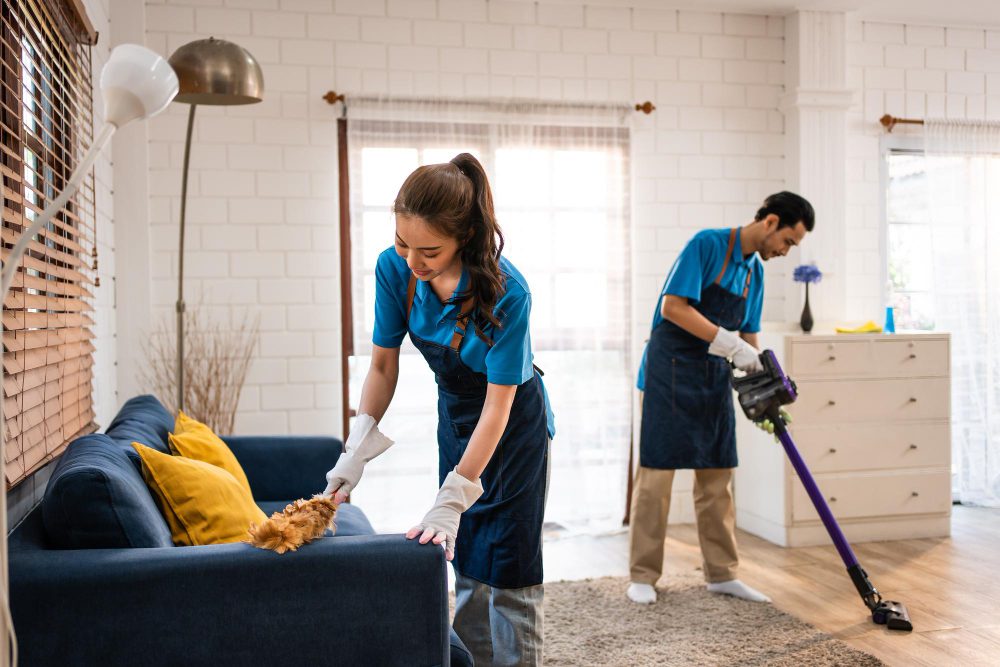
Routine cleaning keeps everyday dirt under control, but it does not always address the buildup that develops in less frequently cleaned areas. Baseboards, light fixtures, cabinet fronts, behind furniture, detailed bathroom surfaces, and appliance interiors can gradually be overlooked even when a home is cleaned regularly.
So how often should you deep clean your house? There is no single schedule that applies to every household. Many homes benefit from a detailed deep clean a few times a year, while high-traffic homes may need certain deep-cleaning tasks more often. Other households can go longer when routine cleaning is consistent and the home has relatively little traffic.
The most useful approach is to think about deep cleaning as a reset. Instead of treating every task as a monthly requirement, identify the areas that need more attention than your normal cleaning routine provides and plan deeper work around your household’s actual needs.
How Often Should You Deep Clean Your House?
If you are comparing deeper cleaning with ongoing maintenance, a regular recurring cleaning schedule can help keep everyday cleaning tasks from building up between deeper resets.
For many households, a whole-home deep cleaning every three to six months can be a practical starting point. That does not mean every deep-cleaning task must be repeated at exactly the same interval. Kitchens, bathrooms, floors, entryways, and pet areas may need attention sooner than low-use rooms.
A home with children, pets, frequent guests, heavy cooking, or high daily traffic may need more frequent deep cleaning. A smaller, lower-traffic home that receives regular maintenance may be comfortable with seasonal deep cleaning or occasional professional service.
Every 3 months
Useful for active households where dust, pet hair, bathroom buildup, kitchen residue, and high-traffic wear accumulate quickly.
Every 4 to 6 months
A practical seasonal rhythm for many households that maintain the home regularly between deeper visits.
Twice a year
Can work for lower-traffic homes where routine cleaning is consistent and detailed tasks are rotated.
Once a year or as needed
May suit lightly used homes, guest properties, or households that handle most deep-cleaning tasks themselves throughout the year.
What Makes Deep Cleaning Different From Regular Cleaning?
Regular cleaning is designed to maintain a home’s everyday condition. Deep cleaning goes further into areas that may not receive attention during every visit.
Routine cleaning commonly focuses on:
- Dusting accessible surfaces
- Vacuuming and mopping floors
- Cleaning bathrooms
- Cleaning kitchen counters and sinks
- Maintaining bedrooms and living spaces
- Removing visible everyday dirt and debris
Deep cleaning may add:
- Detailed baseboard cleaning
- Cleaning less frequently addressed corners
- More detailed bathroom buildup removal
- Cabinet-front cleaning
- Detailed appliance cleaning
- Cleaning behind or beneath accessible furniture
- High-surface dusting
- Detailed door, frame, and trim cleaning
- Extra attention to buildup and neglected areas
The exact scope varies by cleaning provider and home. A deep clean should be based on the property’s condition rather than a generic assumption that every room requires the same tasks.
Signs Your House Needs a Deep Clean
The calendar is only one way to decide when to deep clean. The condition of the home can be a better signal.
- Dust returns quickly to surfaces that are normally maintained.
- Baseboards have visible dust or marks.
- Corners and edges have accumulated debris.
- Bathroom grout, fixtures, or shower areas need more detailed attention.
- Kitchen cabinets or appliance surfaces have sticky residue.
- Pet hair has accumulated under furniture or along edges.
- Windowsills and tracks have visible dirt.
- Light fixtures or ceiling fans have noticeable dust.
- The home feels clean after routine cleaning but still looks overdue for a reset.
- You are preparing for guests or a special occasion.
- You have recently completed a move, renovation, or unusually busy period.
How Household Size Affects Deep Cleaning Frequency
The number of people living in a home influences how quickly surfaces and shared spaces receive traffic. A family with several occupants may create more dust, crumbs, fingerprints, laundry, bathroom use, and floor traffic than a single-person household.
- More occupants generally mean more shared-space traffic.
- Children can increase crumbs, spills, fingerprints, and floor debris.
- Multiple bathrooms may create more detailed cleaning work.
- Large families may need rotating deep-cleaning tasks more frequently.
- Smaller households may be able to extend the interval when routine maintenance is consistent.
Household size should be considered alongside the home’s square footage. A large but lightly used home may have a different cleaning pattern from a smaller home with constant activity.
How Pets Affect Deep Cleaning Frequency
Pets can increase the amount of hair, dander, dirt, and outdoor debris that enters a home. They can also create specific cleaning needs around feeding areas, sleeping areas, entryways, and upholstery.
- Vacuum under accessible furniture where pet hair collects.
- Clean pet bedding according to care instructions.
- Address hair along baseboards and floor edges.
- Clean feeding areas and nearby floors.
- Pay attention to rugs and upholstery.
- Give entryways extra attention when pets regularly go outside.
- Address accidents promptly and use products appropriate for the affected surface.
A household with multiple pets may benefit from more frequent deep cleaning, particularly in rooms where animals spend most of their time.
How Children and Busy Families Affect Deep Cleaning
Busy families often maintain the visible parts of the home while postponing detailed tasks. A scheduled deep clean can help address those jobs before they become a larger project.
- Play areas can accumulate dust and small debris.
- Dining areas may develop food residue.
- High-touch surfaces receive constant use.
- Entryways experience repeated traffic.
- Bedrooms and shared spaces may need detailed floor care.
- Closets and storage areas can become difficult to organize.
Regular cleaning remains important between deeper visits. Deep cleaning should complement, not replace, everyday maintenance.
Deep Cleaning Frequency for Kitchens
For homes that need more detailed kitchen attention, professional cleaning can be useful when routine maintenance is no longer enough.
Kitchens often need deep attention sooner than low-use rooms because cooking produces grease, food particles, spills, and frequent surface contact.
- Clean cabinet fronts and handles.
- Clean the stovetop in detail.
- Clean the microwave interior when needed.
- Clean appliance exteriors.
- Clean the sink and faucet.
- Address buildup around backsplash areas.
- Clean accessible areas beneath or beside appliances.
- Organize and wipe pantry shelves.
- Clean refrigerator shelves and drawers when needed.
- Deep clean floors and edges.
Homes that cook frequently may need kitchen deep-cleaning tasks rotated monthly or seasonally rather than waiting for a single whole-house deep clean.
Deep Cleaning Frequency for Bathrooms
Bathrooms can show buildup quickly because of moisture, soap residue, frequent use, and limited ventilation in some rooms.
- Clean toilets thoroughly.
- Clean sinks and faucets.
- Address soap residue on shower and tub surfaces.
- Clean shower doors or curtains according to their materials.
- Clean mirrors.
- Clean cabinet fronts and handles.
- Clean around toilet bases and floor edges.
- Wash or replace bath mats as appropriate.
- Check corners and less accessible areas.
Regular bathroom cleaning should continue between deeper visits. Deep cleaning is particularly useful when buildup remains after routine maintenance.
Deep Cleaning Bedrooms and Living Areas
Regular maintenance can also help keep these spaces manageable between visits. See the recurring cleaning service options for ongoing household cleaning.
Bedrooms and living rooms can appear clean while still accumulating dust in less visible locations.
- Vacuum under accessible beds and furniture.
- Dust lamps and light fixtures.
- Clean baseboards.
- Vacuum rugs and upholstery according to care instructions.
- Clean behind accessible furniture.
- Dust picture frames and decorative surfaces.
- Clean doors and frequently touched hardware.
- Refresh bedding and washable textiles.
How Often Should You Deep Clean Floors?
Floor deep cleaning depends heavily on the flooring material and household traffic. High-traffic entryways and kitchens may need detailed attention more often than bedrooms or rarely used rooms.
- Vacuum carpets and rugs thoroughly.
- Clean floor edges and corners.
- Sweep before mopping hard floors.
- Use products appropriate for the flooring material.
- Follow manufacturer instructions for hardwood, laminate, vinyl, tile, and natural stone.
- Address spills promptly instead of allowing residue to accumulate.
Professional carpet cleaning is a separate service from ordinary vacuuming and should be scheduled according to carpet condition, manufacturer guidance, traffic, and household needs.
Seasonal Deep Cleaning Makes Sense
Seasonal projects can also be paired with a broader house cleaning service when several rooms need attention at the same time.
Seasonal changes provide natural reminders to rotate deeper tasks. Spring and fall are particularly useful times because households often change routines, clothing, bedding, and indoor activity.
Spring
Focus on post-winter dust, entryways, windows, lighter bedding, and areas that were less accessible during winter.
Summer
Pay attention to outdoor-to-indoor traffic, pet activity, windows, patios or related transition areas, and spaces used more frequently.
Fall
Prepare for more indoor time, clean entryways, refresh bedding and closets, and address summer dust and debris.
Winter
Focus on high-traffic indoor areas, moisture-prone entryways, kitchens, bathrooms, and areas used more heavily during time indoors.
A Deep Cleaning Schedule for a Busy Household
You do not have to deep clean the entire home at once. Rotating tasks can make the workload easier to manage.
Monthly
Choose one or two high-use areas for detailed attention, such as the kitchen, main bathroom, entryway, or pet areas.
Every 3 months
Complete a broader reset of floors, baseboards, bathrooms, kitchen surfaces, high areas, and living spaces.
Every 6 months
Review the whole house and address tasks that have been postponed, including less-used rooms and storage areas.
Annually
Review rarely cleaned areas and decide which tasks should be completed professionally or added to a seasonal plan.
Deep Cleaning Checklist by Room
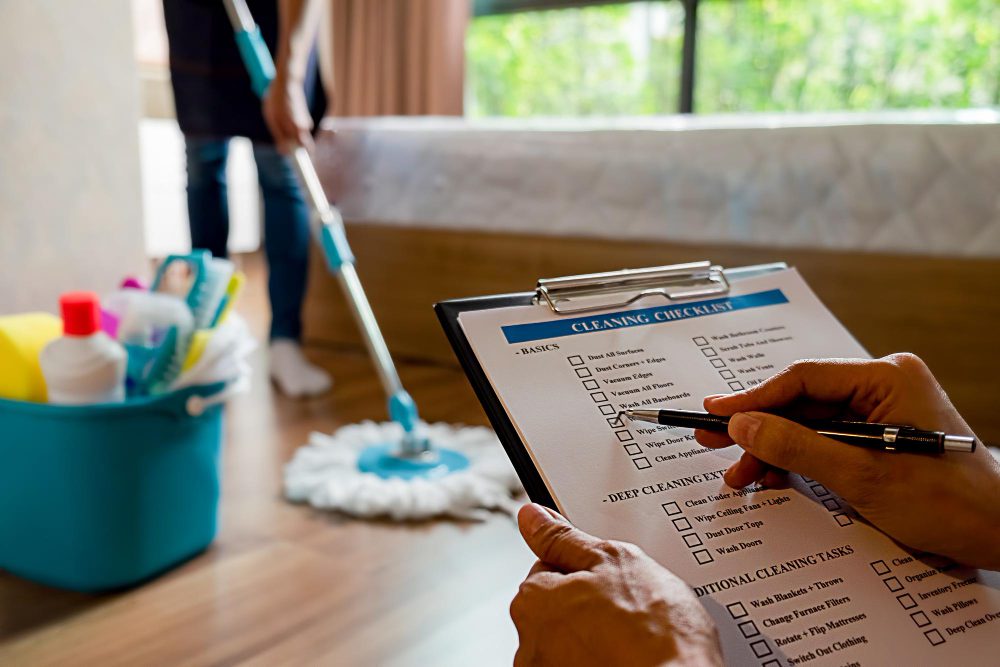
For a practical room-by-room starting point, see the deep cleaning checklist for tasks to work through before scheduling a detailed reset.
Kitchen
- Cabinets and handles
- Appliances
- Sink and faucet
- Backsplash
- Pantry
- Refrigerator
- Floors and edges
Bathroom
- Toilet
- Sink and faucet
- Shower or tub
- Mirrors
- Cabinets
- Floor edges
- High-touch surfaces
Bedrooms
- Bedding
- Under accessible furniture
- Baseboards
- Closets
- Light fixtures
- Floors
Living areas
- Upholstery
- Rugs
- Furniture edges
- Baseboards
- High surfaces
- Doors and hardware
Entryway
- Mats
- Floors
- Doors
- Handles
- Corners
- Storage areas
Laundry area
- Floors
- Appliance exteriors
- Accessible lint areas
- Shelving
- Product spills
When a Professional Deep Cleaning Is Worth Considering
For households that want continued maintenance after the reset, recurring house cleaning can help keep the home on a consistent schedule.
Professional deep cleaning can be useful when the amount of work exceeds what you can comfortably complete with your available time and equipment. It can also make sense when you want to establish a cleaner baseline before starting recurring service.
- The home has not had a detailed cleaning for a long time.
- You are preparing for guests or a major event.
- You are moving into or out of a property.
- You recently completed construction or renovation.
- Pet hair and buildup have accumulated in multiple rooms.
- Routine cleaning no longer seems to restore the home fully.
- You have limited time for detailed cleaning.
- You want to establish a baseline before recurring cleaning.
SHINENOS provides
SHINENOS provides deep cleaning services for homeowners who need a more intensive cleaning approach.
Deep Cleaning vs. Move-In or Move-Out Cleaning
If the cleaning is connected to a move, review the move-in and move-out cleaning option rather than treating the project as routine home maintenance.
These services can overlap, but the purpose is different. Deep cleaning is generally about restoring a home that is being actively lived in. Move-in or move-out cleaning is designed around a property transition and often involves preparing the space for a new occupant or leaving it ready for turnover.
If you are moving, a dedicated move-in or move-out cleaning service may be more appropriate than simply booking a standard deep clean. SHINENOS also provides
If you are moving, a dedicated move-in and move-out cleaning service may be more appropriate than simply booking a standard deep clean.
How to Keep Deep Cleaning From Becoming Overwhelming
A consistent house cleaning routine can make larger seasonal resets easier to manage.
- Keep routine cleaning consistent.
- Deal with spills promptly.
- Declutter before detailed cleaning.
- Rotate less frequent tasks.
- Keep a written seasonal checklist.
- Clean from high surfaces downward.
- Finish floors after dusting and surface cleaning.
- Do not postpone small buildup for years.
- Ask for professional help when the scope becomes too large.
Questions to Ask Before Choosing a Deep Cleaning Frequency
- Which rooms become dirty first?
- How many people live in the home?
- Are there pets?
- How often do we cook?
- How much time can we spend cleaning between professional visits?
- Do we entertain often?
- Which cleaning tasks are repeatedly postponed?
- Does the home have specialty flooring or surfaces requiring specific care?
- Would seasonal cleaning be easier than a single large annual project?
Frequently Asked Questions
How often should you deep clean your house?
A whole-home deep clean every three to six months can be a practical starting point for many households. Higher-traffic homes may need more frequent attention, while lower-traffic homes may be able to go longer.
Is deep cleaning necessary if I clean every week?
Regular cleaning reduces the need for frequent whole-home deep cleaning, but some areas still receive less attention. Periodic deep cleaning can address those neglected tasks.
Should I deep clean every month?
Most homes do not need every deep-cleaning task repeated monthly. Instead, rotate detailed tasks and give high-use areas additional attention when buildup appears.
How often should a house with pets be deep cleaned?
Pet households may need more frequent deep cleaning because hair, dander, and outdoor debris can accumulate faster. The appropriate schedule depends on the number of pets and household activity.
Should I deep clean before recurring cleaning?
If the home has significant buildup or has not been professionally cleaned for a long time, a deep clean can establish a useful starting point for recurring maintenance.
What is the difference between deep cleaning and regular cleaning?
Regular cleaning focuses on ongoing maintenance. Deep cleaning adds detailed work in areas that are less frequently addressed or have accumulated buildup.
Can I deep clean one room at a time?
Yes. Rotating rooms or task categories can make deep cleaning easier for busy households.
When is the best time to deep clean a house?
Seasonal transitions, before or after major events, after a move or renovation, and whenever visible buildup has accumulated can all be useful times.
How do I know if my house needs a professional deep clean?
If multiple areas have accumulated buildup, routine cleaning no longer feels sufficient, or the workload is too large for your available time, professional deep cleaning may be worth considering.
Final Thoughts
Once the deeper work is complete, recurring cleaning can help maintain the results with a consistent routine.
Deep cleaning works best when it is treated as part of an overall home maintenance routine rather than an emergency task. Regular cleaning handles everyday dirt, while periodic deep cleaning addresses areas that naturally receive less attention.
For many households, a three- to six-month rhythm is a reasonable starting point, but your home may need a different schedule. Household size, pets, cooking, guests, seasonal changes, and the amount of cleaning you do yourself all matter.
If your home needs a detailed reset, book SHINENOS deep cleaning or schedule a professional cleaning through SHINENOS booking.