Laminate and vinyl floors are popular because they are practical, durable, and easier to maintain than many traditional flooring materials. But “easy to maintain” does not mean every cleaner or mop is safe.
Too much water can damage laminate. Harsh chemicals can dull protective finishes. Steam can be risky for some products. Oil-based cleaners can leave a film that attracts dirt instead of removing it.
Vinyl has its own care requirements, especially when dealing with luxury vinyl plank flooring, textured surfaces, or older sheet vinyl.
This guide explains how to clean laminate floors properly, how to clean vinyl flooring, what type of laminate floor cleaner to use, how to remove common stains, and which cleaning methods are better left off the floor.
First: Know What Kind of Floor You Have
Before cleaning, identify the flooring.
Laminate is a layered product with a printed surface and protective top layer. It often resembles wood or stone but does not behave exactly like either.
Vinyl flooring can include sheet vinyl, luxury vinyl plank, and luxury vinyl tile. The manufacturer’s cleaning recommendations can vary.
If you are unsure, check the installation paperwork, manufacturer’s website, or care instructions.
The safest cleaner in the world is still the wrong cleaner if the flooring manufacturer says not to use it.
What You Need to Clean Laminate and Vinyl Floors
For routine cleaning, keep it simple:
- Soft-bristle broom or vacuum
- Microfiber mop
- Microfiber cloths
- Warm water
- Flooring-safe cleaner
- Small bucket or spray bottle
Choose a cleaner specifically labeled for your floor type when possible.
Avoid using a soaking wet mop.
How to Clean Laminate Floors Step by Step
Step 1: Remove Loose Dirt
Vacuum or sweep first.
Use a vacuum setting designed for hard floors if available. Avoid a beater bar that could scratch the surface.
Pay attention to entryways, under dining tables, and other high-traffic areas.
Step 2: Treat Stains Before Mopping
If you see a sticky spot, deal with it separately.
Use a microfiber cloth lightly dampened with an appropriate floor cleaner.
Do not flood the area.
Step 3: Mop With Minimal Moisture
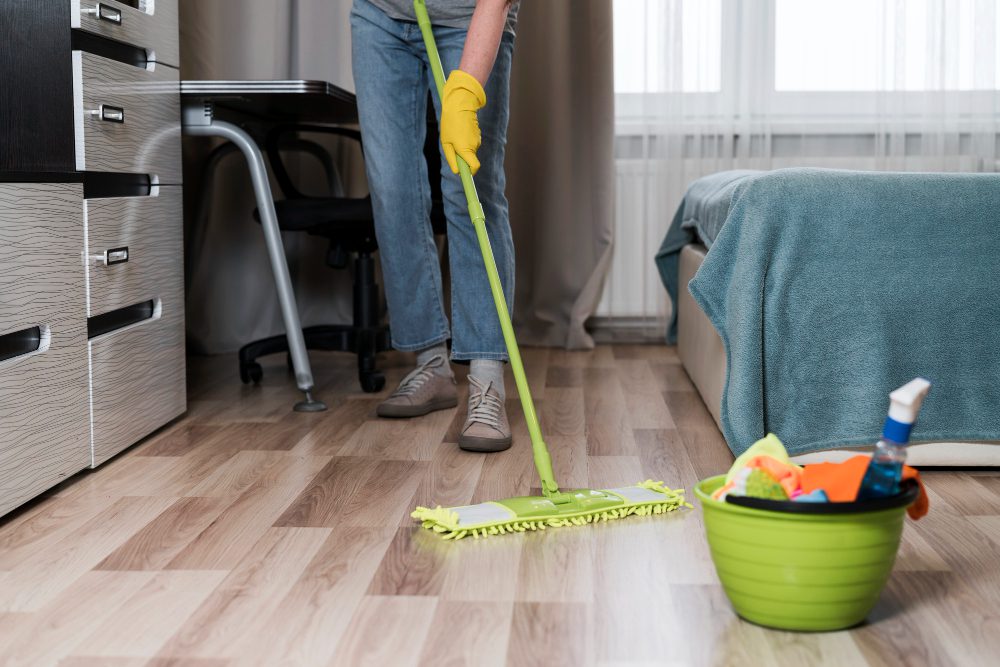
Use a microfiber mop that is damp rather than soaking wet.
Work in small sections.
The floor should dry quickly. If water is sitting on the surface for a long time, you are probably using too much.
Step 4: Dry Any Wet Areas
If you see puddles or excess moisture, wipe them immediately.
This is especially important around seams.
How to Clean Vinyl Flooring
Vinyl is generally more moisture-tolerant than laminate, but it still benefits from controlled moisture.
Vacuum or sweep first.
Use a damp microfiber mop with a vinyl-safe cleaner.
Avoid leaving standing water.
For textured vinyl plank floors, a soft brush can help remove dirt from grooves.
Do not use a stiff brush that could scratch the surface.
How to Clean Vinyl Plank Floors
Luxury vinyl plank flooring is often marketed as low-maintenance, but the surface can still develop a dull film if the wrong products are used.
Vacuum regularly.
Mop with a lightly damp microfiber mop.
Use a cleaner approved for luxury vinyl.
Avoid wax and oil-based products unless the flooring manufacturer specifically recommends them.
If a film develops, stop adding more polish. More product usually makes the problem worse.
What Is the Best Laminate Floor Cleaner?
There is no single cleaner that is best for every laminate floor.
The safest choice is a product specifically approved for your flooring manufacturer and finish.
For simple everyday dirt, a small amount of appropriate cleaner and a damp microfiber mop are usually enough.
Avoid cleaners that leave a glossy coating unless your manufacturer recommends them. A shine product can create residue that attracts dust and makes the floor look streaky.
Can You Use Vinegar on Laminate Floors?
Vinegar is a popular household cleaner, but laminate manufacturers do not all recommend it.
If your flooring manufacturer permits diluted vinegar, use it sparingly and with minimal moisture.
Do not soak the floor.
If you are unsure, use a laminate-safe commercial cleaner instead.
Can You Use a Steam Mop on Laminate?
This is one of the biggest cleaning questions for laminate floors.
Steam introduces heat and moisture. Some laminate manufacturers prohibit steam mops because moisture can enter seams and cause swelling, warping, or separation.
Do not assume that a steam mop is safe because it works well on tile.
Check your flooring manufacturer’s instructions first.
What Not to Use on Laminate Floors
Avoid:
- Excess water
- Soaking wet mops
- Steam unless specifically approved
- Steel wool
- Abrasive powders
- Harsh bleach-based cleaners
- Strong ammonia-based products unless approved
- Oil-based cleaners
- Wax and polish unless recommended
- Furniture polish
- Rough scrubbers
A floor can look shiny after using the wrong product and still be developing a long-term problem underneath that film.
How to Remove Streaks From Laminate Floors
Streaks are often caused by too much cleaner, dirty mop water, or residue from a previous product.
Start by vacuuming or sweeping.
Use a clean microfiber mop and a small amount of laminate-safe cleaner.
Work in sections.
If the floor is drying slowly, reduce the amount of moisture.
Change the mop pad when it becomes dirty. A dirty pad can simply move residue around.
How to Remove Grease From Laminate Floors
Kitchen floors often collect a thin layer of grease.
Do not respond by pouring more cleaner onto the floor.
Instead, use a microfiber cloth and a small amount of floor-safe cleaner on the affected area.
Wipe gently, then dry.
For stubborn grease, check the flooring manufacturer’s stain-removal instructions.
How to Remove Scuff Marks
Fresh scuffs may come off with a damp microfiber cloth.
For a stubborn mark, use only a product approved for the flooring.
Avoid rough scrubbing.
Do not use abrasive powders simply because they are effective on other surfaces.
How to Clean Pet Messes
Clean pet accidents quickly.
Remove solid material safely.
Blot liquid rather than spreading it.
Use a flooring-safe cleaner according to the manufacturer’s instructions.
Do not allow urine or other liquids to sit around seams.
If odor remains, clean the surrounding area thoroughly and inspect whether liquid has reached the subfloor.
For homes with pets, regular vacuuming is especially important because hair and fine debris can accumulate along floor edges.
How Often Should You Clean Laminate and Vinyl Floors?
A simple schedule works for most homes.
Daily or As Needed
- Wipe spills
- Remove food and pet messes
- Sweep high-traffic areas
Several Times a Week
- Vacuum or sweep
- Focus on entryways and areas where dirt collects
Weekly
- Damp mop the floor
- Clean under frequently used furniture
- Check corners and edges
Monthly
- Clean floor edges
- Move lightweight furniture
- Address stubborn marks
- Clean hard-to-reach areas
Homes with pets, children, or heavy traffic may need more frequent vacuuming.
How to Protect Laminate and Vinyl Floors
Cleaning is only part of floor care.
Use entry mats to reduce dirt coming inside.
Add felt pads under furniture.
Lift furniture instead of dragging it.
Clean spills quickly.
Keep pet nails trimmed if appropriate.
Do not allow standing water to remain on the floor.
These simple habits can reduce scratches and moisture-related damage.
How to Clean Floors Without Leaving a Film
The most important rule is to use less product.
A floor should not feel sticky after cleaning.
Use a clean microfiber mop.
Follow the correct dilution instructions.
Change dirty water or mop pads frequently.
Do not keep adding cleaner because the floor “doesn’t look shiny enough.”
A clean floor does not need to feel slippery or coated.
Laminate vs. Vinyl: Are They Cleaned the Same Way?
The overall process is similar, but the tolerance for moisture can differ.
Laminate generally requires stricter moisture control because water can penetrate seams and damage the core.
Vinyl is more water-resistant, but it still benefits from prompt drying and the right cleaner.
Neither flooring type should be treated like ceramic tile.
If you are unsure which method is appropriate, follow the floor manufacturer’s instructions.
Common Floor Cleaning Mistakes
Mopping With Too Much Water
This is especially risky for laminate.
Using a Dirty Mop
You are spreading dirt rather than removing it.
Using the Wrong Cleaner
A cleaner designed for another surface may leave residue or damage the finish.
Polishing Laminate
Wax and polish can create buildup.
Using a Steam Mop Without Checking
Heat and moisture can damage some flooring.
Ignoring Floor Edges
Dirt collects along baseboards and corners.
SHINENOS’s guide to cleaning baseboards explains why those floor-level areas collect so much dust and grime.
When Professional Floor Cleaning Helps
Regular vacuuming and mopping handle everyday dirt, but some homes need a deeper reset.
If floors have heavy buildup, persistent residue, or hard-to-reach dirt around furniture and edges, professional cleaning can save time.
SHINENOS provides recurring cleaning services for ongoing maintenance and deep cleaning services when a home needs a more detailed reset.
A professional cleaning routine is especially useful if you are preparing for guests, recovering from a busy season, or trying to get a home back to a manageable baseline.
Frequently Asked Questions
What is the best way to clean laminate floors?
Vacuum or sweep first, then use a lightly damp microfiber mop and a laminate-safe cleaner. Keep moisture to a minimum and dry spills quickly.
Can I mop vinyl plank flooring?
Yes. Use a damp microfiber mop and a cleaner approved for vinyl plank flooring. Avoid leaving standing water.
Can I use vinegar on vinyl floors?
Some vinyl products allow diluted vinegar, while others do not. Check the manufacturer’s instructions first.
Why are my laminate floors streaky after mopping?
Too much cleaner, dirty mop water, or product residue are common causes. Use less product and a clean microfiber pad.
Can steam damage laminate floors?
It can. Steam introduces heat and moisture that may damage some laminate products. Only use a steam mop if the flooring manufacturer specifically approves it.
How often should laminate floors be cleaned?
Vacuum or sweep several times a week in most homes and damp mop weekly. Increase frequency for pets, children, or heavy traffic.
Final Takeaway
Laminate and vinyl floors are easiest to maintain when you avoid over-cleaning them.
Use a soft vacuum or broom, a clean microfiber mop, minimal moisture, and a floor-safe cleaner. Skip harsh chemicals, abrasive tools, unnecessary polish, and steam unless your flooring manufacturer says they are safe.
The goal is not to make the floor look wet and glossy. The goal is to remove dirt without leaving residue or damaging the surface.
Instead of spending your free time keeping up with the floors, schedule a professional cleaning with SHINENOS and enjoy a cleaner home without adding another chore to your weekend.