Here’s something almost nobody thinks about until they’re either moving out or getting ready to host a gathering: baseboards. They sit at the bottom of every wall in every room, collecting dust, pet hair, scuff marks, and grease, and they mostly go ignored until someone notices how bad they’ve gotten.
When a professional cleaner walks into a home, baseboards are one of the first things they check. It’s a quick signal about how thorough the cleaning routine actually is. Clean baseboards make a room look finished. Dirty ones undercut everything else you’ve done.
The good news: cleaning baseboards isn’t complicated. It just takes the right approach, a few simple supplies, and about 20 minutes per room if you haven’t done it in a while. This guide walks through exactly how to do it, what to use on different types of baseboards, and how to keep them cleaner between sessions.
Why Baseboards Get so Dirty
Baseboards catch what the rest of the room misses. Dust settles and clings to the horizontal top surface. Pet hair and dander drift along floors and pile up against the vertical face. In kitchens, grease vapor from cooking settles on every surface within range, including the baseboards near the stove. In bathrooms, moisture and soap mist contribute to buildup.
On top of regular dust and grime, baseboards collect scuffs from furniture, shoe kicks, vacuum bumps, and anything dragged across the floor. In homes with kids or pets, this happens faster.
The location is also part of the problem. Baseboards are at floor level, which means cleaning them requires getting down low, and most people would rather not. So they get skipped during routine cleaning until the buildup becomes impossible to ignore.
What You Need Before You Start
Nothing expensive or specialized. Here’s what works:
- A vacuum with a brush attachment
- Microfiber cloths (several, since they get dirty fast)
- A bucket of warm water
- Dish soap or all-purpose cleaner
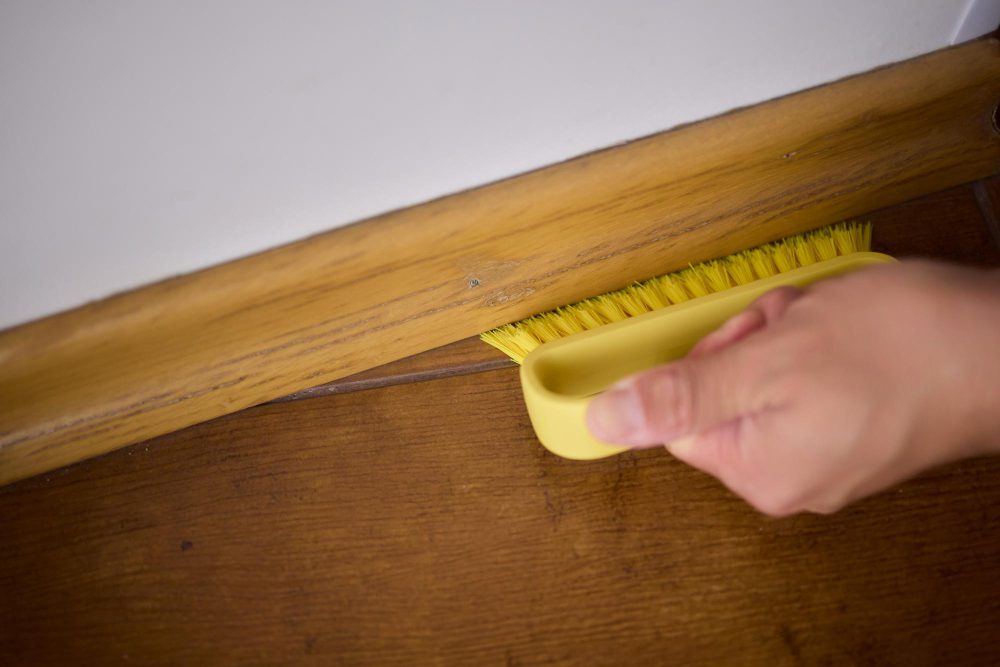
- A soft-bristle toothbrush or detail brush for corners and grooves
- Magic eraser for stubborn scuffs
- A dryer sheet (optional, but useful for the finishing step)
For painted wood baseboards, avoid anything abrasive that could scratch the finish. For unpainted wood, be careful with excess moisture. For vinyl or PVC baseboards, almost any cleaner works without worry.
Step-By-Step: How to Clean Baseboards Properly
Step 1: Dry Clean First
Before any liquid touches the baseboard, remove the loose dust and debris. Use the brush attachment on your vacuum and run it along the top edge and face of the baseboard. Get the corners where the baseboard meets the wall and the bottom where it meets the floor.
You can also use a dry microfiber cloth or a duster for this step. The goal is to remove what you can without spreading wet dust into the surface.
Skipping this step means you’ll be pushing dusty water around instead of actually cleaning.
Step 2: Mix Your Cleaning Solution
A few drops of dish soap in warm water is all you need for most painted baseboards. Fill a bucket or a small bowl.
For heavily soiled areas, like kitchen baseboards near the stove, a slightly stronger solution with an all-purpose degreaser works better. Don’t use anything with bleach on painted wood, since it can affect the finish over time.
Step 3: Wipe Down the Baseboard
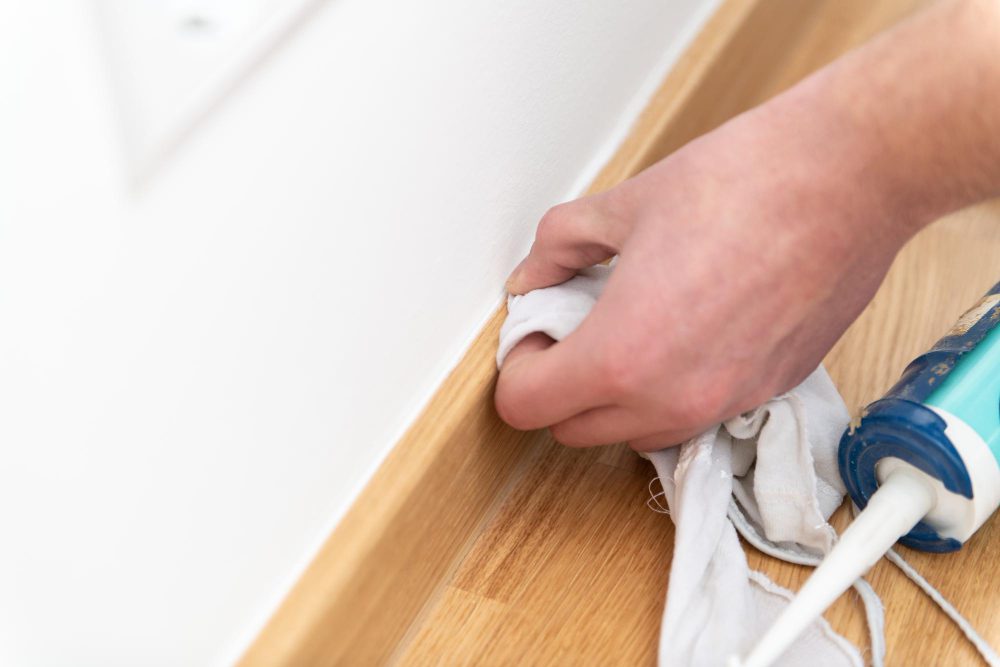
Dip a microfiber cloth in your cleaning solution, wring it out well so it’s damp but not dripping, and wipe the full length of the baseboard from top to bottom.
Pay attention to the top edge, which collects the most dust. Work in sections of a few feet at a time. Rinse your cloth frequently, because you’ll pick up a lot of grime quickly and spreading it around defeats the purpose.
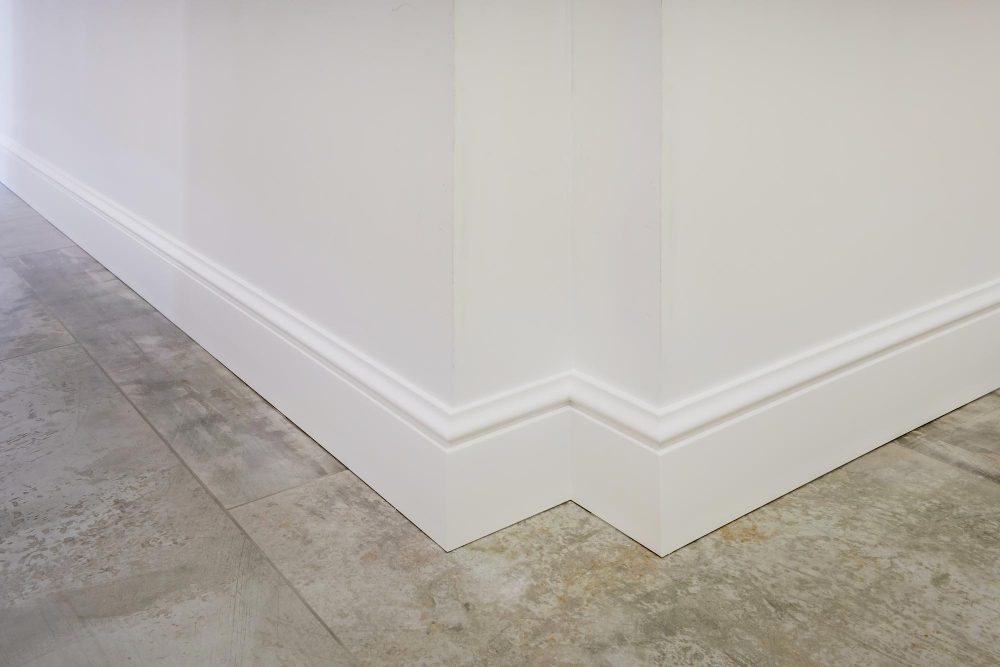
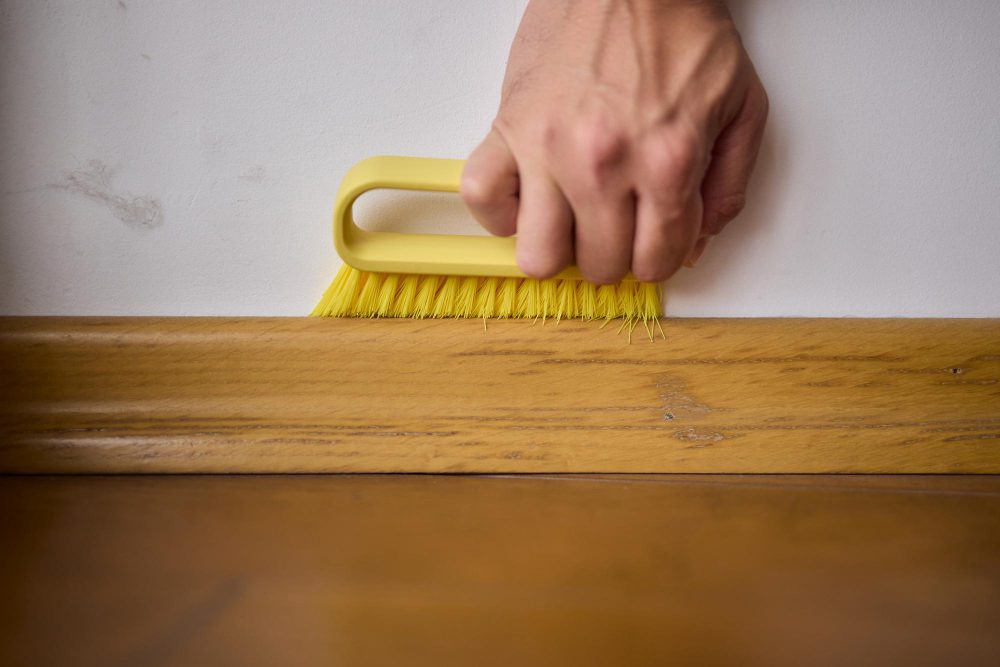
For baseboards with grooves or decorative profiles (which are common in older Minnesota homes), use your toothbrush or detail brush to get into the ridges. These spots hold dust and are impossible to clean with a flat cloth alone.
Step 4: Address Scuffs and Stains
Scuff marks from shoes or furniture respond well to a magic eraser. Dampen it slightly and rub gently on the scuff. Don’t scrub aggressively on painted baseboards, since magic erasers are mildly abrasive and can dull a gloss finish if used too hard.
For sticky residue or grease, a small amount of rubbing alcohol on a cloth usually cuts through it without harming paint. Test on a small area first if you’re unsure about your baseboard finish.
Step 5: Dry the Surface
Wipe the baseboard down with a dry microfiber cloth to remove excess moisture. This is especially important in bathrooms, where prolonged moisture can cause issues with painted wood or drywall at the baseboard connection.
Step 6: Apply a Dryer Sheet
This is the pro tip that actually works. After the baseboards are clean and dry, wipe them down with a dryer sheet. The anti-static properties in the sheet reduce the rate at which dust clings to the surface.
Clean baseboards that have been wiped with a dryer sheet stay cleaner noticeably longer between sessions. Fabric softener applied with a damp cloth works the same way if you don’t have dryer sheets.
Room-By-Room Guide: What to Watch For
Kitchen Baseboards
Kitchens have the worst buildup because grease mixes with dust to form a sticky layer that flat-out doesn’t respond to dry cleaning. You need a degreaser here, not just dish soap and water.
The baseboards near the stove and under lower cabinets get the most buildup. Plan extra time for this room and change your cloth frequently.
Bathroom Baseboards
Soap scum and hard water residue can collect on bathroom baseboards, especially near the tub or shower. A bathroom cleaner or a solution with a bit of white vinegar handles mineral deposits effectively. Dry thoroughly after cleaning to prevent moisture damage.
Living Room and Bedroom Baseboards
These are primarily dust management. The vacuum and damp cloth method handles them well. If you have pets, you’ll find hair accumulation at floor level that needs to come off first.
Pay attention to the corners behind furniture, which are easy to skip because you don’t see them but which can have significant buildup.
Carpeted Rooms
When cleaning baseboards in carpeted rooms, be careful that your cleaning solution doesn’t drip onto the carpet. Work with a well-wrung cloth. If you accidentally get moisture on carpet near the baseboard, blot it immediately with a dry towel.
How Often Should You Clean Baseboards?
Honestly, more often than most people do it.
In a typical home without pets, baseboards need attention every one to three months. That’s a surface wipe-down, not a full deep clean every time.
In homes with dogs or cats, once a month is more realistic. Pet hair and dander accumulate fast at floor level.
Kitchens benefit from more frequent attention on the baseboards near cooking areas. A quick monthly wipe prevents grease from building up to the point where it requires serious scrubbing.
If you’re preparing for a home sale, hosting family, or doing a seasonal deep clean, every baseboard in the house should get a full treatment.
When to Call in a Professional
If your baseboards are painted and the buildup has been going on for years, there’s a point where cleaning them is not enough and they need repainting. A professional cleaner can tell you which ones can be restored and which ones have damage beyond what cleaning will fix.
For regular cleaning as part of a professional service, our recurring cleaning includes baseboard wiping as part of the scope. Our deep cleaning service covers every baseboard in the home with the full treatment described above, including corners, grooves, and difficult spots.
We serve homeowners in Eden Prairie, Minnetonka, Plymouth, Edina, Minneapolis, Maple Grove, Excelsior, and Wayzata.
What Professional Cleaners Do Differently
The main difference between a professional baseboard clean and a DIY job is speed and consistency.
Experienced cleaners develop efficient techniques: they move through a room systematically without backtracking, they know exactly how much moisture to use on each surface type, and they don’t skip corners. They also know when a flat cloth isn’t enough and switch to a detail brush without hesitation.
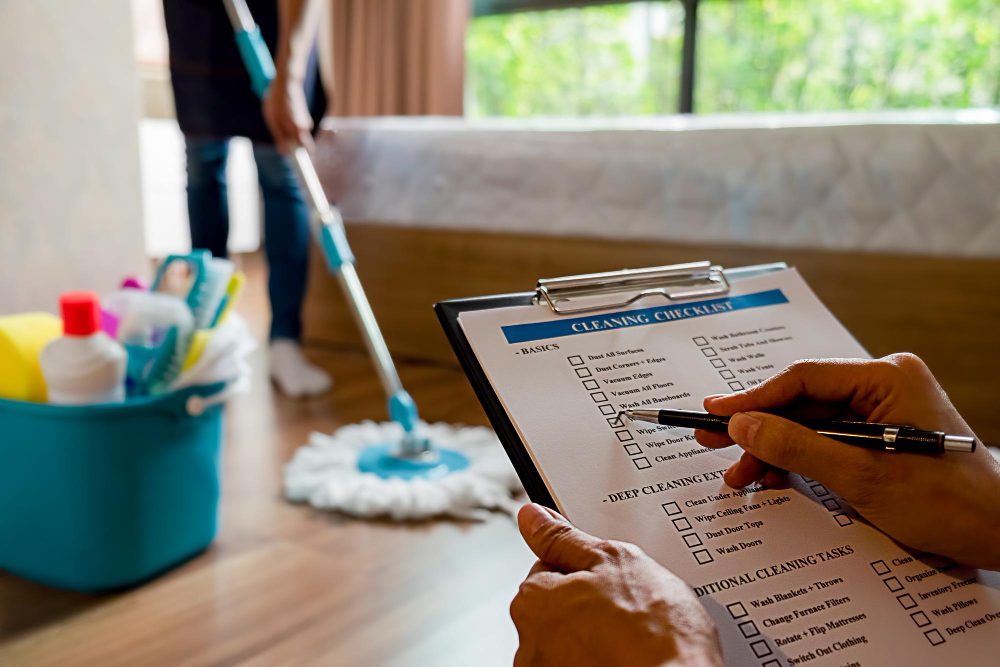
The other difference is that baseboard cleaning isn’t optional in professional cleaning. It’s part of the checklist. In a DIY routine, it tends to get pushed to “next time” indefinitely.
Baseboards and floor-level surfaces are among the most commonly missed areas in home cleaning. Getting them on a regular schedule rather than treating them as an occasional project makes a measurable difference in how clean a home actually feels.
Common Mistakes People Make
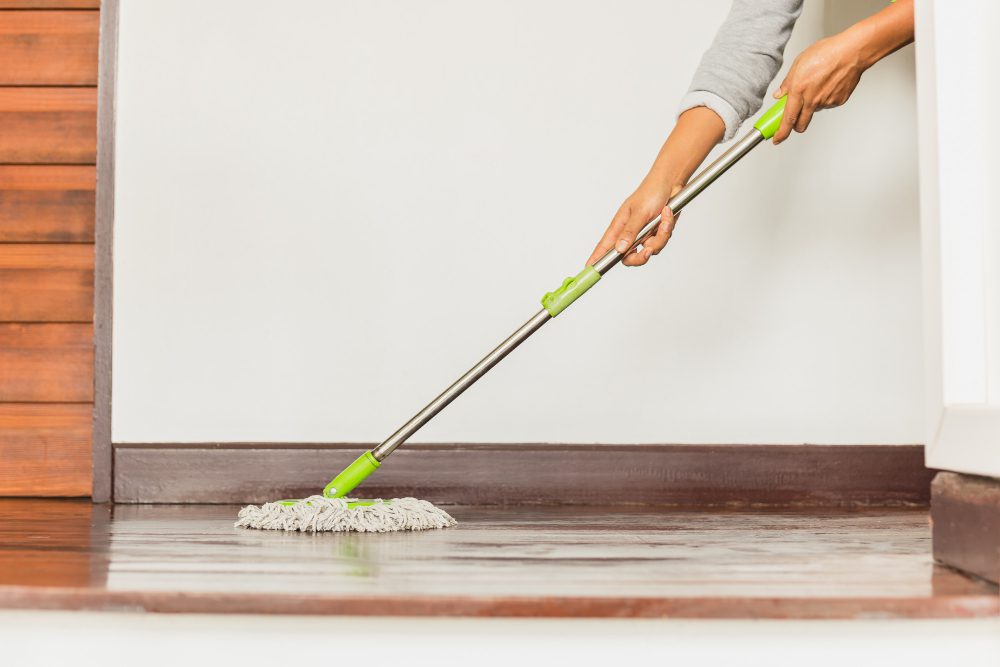
Using too much water. Painted wood can swell or warp with excess moisture. Wring your cloth out well.
Cleaning when the floor hasn’t been vacuumed yet. If you wipe baseboards before vacuuming the floor, you kick up floor debris that then settles back on your freshly cleaned baseboards. Do floors first, baseboards second.
Skipping the corners. The inside corners where two baseboards meet and the bottom corner where the baseboard meets the floor hold the most buildup. A flat cloth can’t reach these well. Use the toothbrush.
Forgetting to move furniture. The baseboard behind the couch or under the bed is just as dirty as the visible sections. Move furniture when you can, or at least use a vacuum attachment to get in as far as possible.
Using an abrasive scrubber on painted baseboards. It’ll clean the grime but scratch the finish, which makes the baseboard look worse and attract more dirt in the future.
Frequently Asked Questions
Do professional cleaners always clean baseboards?
It depends on the service type. In a standard recurring clean, baseboards are often wiped quickly. In a deep cleaning, they receive full attention including corners and grooves. Ask your cleaning service explicitly what baseboard cleaning their service includes.
What’s the fastest way to clean baseboards?
The dryer sheet method works for light maintenance between deep cleans. Simply wipe the baseboard with a dry dryer sheet. It removes surface dust and leaves behind anti-static protection. It takes about a minute per room.
Should I paint or clean my baseboards?
If the paint is peeling, chipped, or discolored beyond what cleaning can address, painting is the right answer. If the paint is in good condition but dirty, cleaning restores them without the cost and time of repainting.
Can I use a steam cleaner on baseboards?
Steam can work well on painted baseboards that are heavily soiled, but use caution near the joint where the baseboard meets the wall. Excess moisture can penetrate and cause drywall issues. Keep the steam cleaner moving and don’t linger in one spot.
What’s the best thing to clean white baseboards with?
For white painted baseboards, warm water with a small amount of dish soap handles most grime. A magic eraser works well for scuffs. For discoloration that won’t clean off, a product like Bar Keepers Friend (used carefully) can help without damaging the paint finish.
How do I prevent baseboards from getting dirty so fast?
After cleaning, wipe them down with a dryer sheet or apply a thin coat of furniture wax. Both create a surface that repels dust and makes future cleaning faster. Regular vacuuming near baseboards also slows the buildup.
Make It Part of Your Regular Routine
Baseboards don’t need to be a major project if you stay on top of them. A quick pass every month or two prevents the kind of buildup that turns into a full hour of scrubbing.
If you’d rather have someone handle it consistently, our professional cleaning teams include baseboard care in both our deep cleaning and recurring cleaning services. We cover the Twin Cities metro area and are happy to build a cleaning schedule that works for your home.
Get a quote from SHINENOS and take baseboards off your to-do list for good.