Kitchen cabinets collect more than people realize. Every time you cook, tiny amounts of grease and moisture travel through the air and settle on nearby surfaces. Add fingerprints, dust, food splashes, and everyday handling, and cabinet doors can develop a sticky film that makes a clean kitchen look unfinished.
The tricky part is that not all cabinets should be cleaned the same way. Painted cabinets, finished wood, laminate, thermofoil, and metal can respond very differently to water and cleaning products.
This guide explains how to clean kitchen cabinets safely, how to remove greasy buildup, what to use on wood cabinets, and how to avoid common mistakes that can damage the finish.
Why Kitchen Cabinets Get Greasy
The cabinets closest to the stove and sink usually collect the most residue.
Cooking creates airborne oils that settle on cabinet doors. Steam carries particles into nearby surfaces. Hands add more oil around knobs and pulls.
Over time, dust sticks to the grease and creates a thicker layer.
That is why a cabinet can look clean from a distance but feel sticky when you touch it.
Regular light cleaning prevents this film from becoming difficult to remove.
What You Need
For most kitchen cabinets, start with:
- Microfiber cloths
- Warm water
- Mild dish soap
- A small bucket or bowl
- Soft sponge
- Soft toothbrush or detail brush
- Dry towel
You may also need a material-specific cleaner for wood, laminate, or painted finishes.
Before using anything stronger than mild soap and water, check the cabinet manufacturer’s care instructions.
How to Clean Kitchen Cabinets Step by Step
Step 1: Remove Items From the Area
You do not necessarily need to empty every cabinet.
For exterior cleaning, clear the countertop and move small appliances or objects away from the cabinet doors.
For an interior deep clean, empty one cabinet at a time so you can work methodically.
Step 2: Dust Before Using Water
Use a dry microfiber cloth to remove loose dust and crumbs.
For cabinet tops, use a vacuum with a soft brush attachment if available.
If you add water immediately, dry dust turns into a paste that is harder to wipe away.
Step 3: Mix a Mild Cleaning Solution
Add a few drops of mild dish soap to warm water.
You want a lightly soapy solution, not a bucket full of bubbles.
Too much detergent can leave a film behind.
Step 4: Test a Hidden Area
If you are not sure how the finish will react, test the solution on an inconspicuous spot.
Wait for the area to dry before continuing.
This is especially important for painted, stained, older, or specialty cabinets.
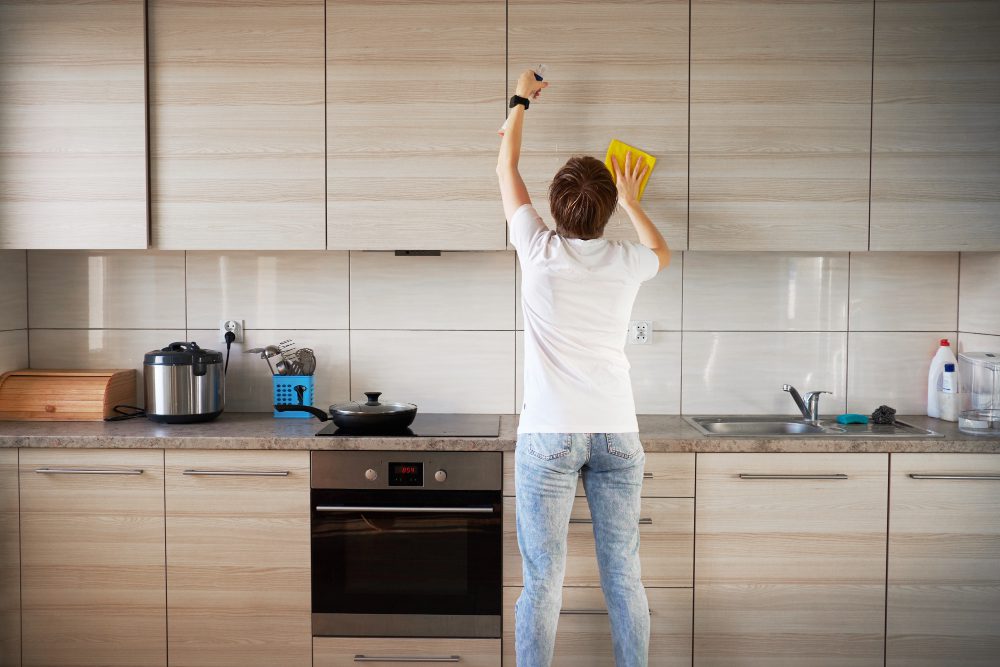
Step 5: Wipe the Doors
Dampen a microfiber cloth and wring it out well.
Wipe the cabinet from top to bottom.
Pay attention to the edges, corners, and areas around handles.
Do not soak the door. Excess water can seep into seams and damage some materials.
Step 6: Clean the Hardware
Handles and knobs collect more oil than most of the cabinet.
Use warm soapy water and a soft cloth.
For removable hardware, you can take it off occasionally for a more thorough clean if the manufacturer allows.
Dry the hardware after cleaning.
Step 7: Rinse and Dry
Use a clean damp cloth to remove soap residue.
Then dry the cabinets with a clean microfiber towel.
Do not leave moisture sitting on wood, MDF, or painted seams.
How to Clean Greasy Kitchen Cabinets
Grease needs a little more time, not necessarily a much stronger cleaner.
Start with warm water and dish soap.
Dampen the cloth and hold it against the greasy area for several seconds. This helps soften the film.
Wipe with the grain if the cabinet has a wood finish.
For heavy grease, repeat the process.
If a stronger degreaser is required, make sure it is approved for the cabinet material. Strong cleaners can strip finishes or dull paint.
Do not assume that because a product works on a stovetop it is safe for cabinet doors.
How to Clean Wood Kitchen Cabinets
Wood cabinets need gentle handling.
Dust them first.
Use a slightly damp microfiber cloth with mild soap if the manufacturer’s care instructions permit it.
Wipe with the direction of the wood grain.
Dry immediately.
Avoid soaking wood cabinets. Water can penetrate seams and cause swelling, warping, or finish damage.
For older or unfinished wood, use the manufacturer’s recommended wood cleaner rather than experimenting with household acids or strong degreasers.
How to Clean Painted Cabinets
Painted cabinets can be sensitive to abrasion.
Use warm water and mild dish soap with a soft cloth.
Do not scrub aggressively with rough sponges.
Magic erasers can remove marks but are mildly abrasive, so they may dull or remove paint on some finishes.
If a painted surface is repeatedly exposed to grease, regular gentle cleaning is safer than waiting until the residue requires heavy scrubbing.
How to Clean Laminate Cabinets
Laminate is often easier to maintain, but the edges and seams still need care.
Use warm water and mild dish soap.
Wipe the surface and dry it afterward.
Avoid abrasive cleaners and rough pads.
Pay attention to damaged edges. If water is getting under a lifted laminate edge, cleaning will not fix the underlying problem.
How to Clean Thermofoil Cabinets
Thermofoil can be sensitive to heat and moisture.
Use a soft cloth and mild cleaning solution.
Avoid excessive water around seams and edges.
Do not use high heat or steam unless the manufacturer specifically says it is safe.
If the thermofoil is peeling, focus on cleaning around the area without forcing moisture underneath it.
How to Clean the Inside of Kitchen Cabinets
Cabinet interiors often get overlooked.
Start by removing everything.
Vacuum crumbs and loose debris.
Wipe shelves and side walls with a lightly damp microfiber cloth.
Use mild soap for sticky residue.
Dry the surfaces before returning food or kitchen items.
This is a good time to check expiration dates and reorganize items that have been pushed to the back.
Do not use excessive water inside cabinets. Wood-based panels can absorb moisture more easily than finished exterior surfaces.
How to Clean Cabinet Tops
The top of upper cabinets can develop a thick layer of dust and grease because it is rarely visible.
Start with a vacuum or dry cloth.
For sticky buildup, use warm soapy water and a microfiber cloth.
Work slowly. Thick grease may require multiple passes.
Dry the surface thoroughly.
This area is especially worth including in a seasonal deep clean because it is easy to ignore during normal kitchen maintenance.
How to Remove Sticky Residue From Cabinets
Sticky residue can come from grease, food, labels, or cleaning products.
Start with mild dish soap and warm water.
If the residue remains, identify what caused it before using a stronger product.
Adhesive residue may require a cabinet-safe product, while grease may simply need more time with warm soapy water.
Do not scrape painted or wood finishes with metal tools.
How to Clean Cabinet Handles and Pulls
Handles deserve special attention because they are touched constantly.
Use warm water and mild dish soap.
For metal hardware, check whether the finish has specific care requirements.
Avoid letting water sit around screws or hardware bases.
If the hardware has become sticky, remove it periodically and clean it separately if practical.
How Often Should You Clean Kitchen Cabinets?
For most homes:
- Quick wipe of high-touch areas: weekly
- Cabinet doors near the stove: weekly or as needed
- Full exterior wipe: every few weeks
- Cabinet interiors: every few months
- Cabinet tops: seasonally
Homes that cook frequently may need more frequent cleaning.
If you have young children, pets, or heavy kitchen traffic, expect cabinet handles and lower doors to collect grime faster.
Common Kitchen Cabinet Cleaning Mistakes
Using Too Much Water
Moisture can enter seams and damage some materials.
Using a Strong Degreaser Without Checking the Finish
A cleaner that removes grease can also remove or dull the finish.
Scrubbing With an Abrasive Pad
It may remove the stain and the finish at the same time.
Ignoring Cabinet Hardware
Handles often hold more grime than the door itself.
Cleaning the Floor Before the Cabinets
If you clean cabinets after the floor, falling dust and residue can make you clean the floor twice. Work from higher surfaces down.
Forgetting the Top of Upper Cabinets
This is one of the most common hidden grease-and-dust zones in a kitchen.
A Better Order for Deep Cleaning Your Kitchen
If you are doing a full kitchen reset, work from high to low.
- Cabinet tops
- Upper cabinet exteriors
- Lower cabinet exteriors
- Cabinet interiors
- Appliance exteriors
- Countertops
- Sink
- Backsplash
- Floors
This keeps dust and loosened grime from landing on surfaces you already cleaned.
SHINENOS also has a guide to deep cleaning your home if you want to plan larger seasonal cleaning tasks.
When Professional Deep Cleaning Helps
Cabinets are only one part of a kitchen.
If grease has built up on the cabinets, the same airborne residue is probably present on appliance fronts, backsplash surfaces, baseboards, and nearby floors.
SHINENOS deep cleaning services are designed for homes that need a more detailed reset, including areas that are easy to miss during a routine clean.
For ongoing maintenance, recurring cleaning services can keep the buildup from returning as quickly.
If your kitchen has a persistent odor or small flying insects around the sink or trash, our gnat removal and cleaning guide covers the cleaning and moisture conditions that commonly contribute to the problem.
Frequently Asked Questions
What is the best thing to clean kitchen cabinets with?
Warm water, mild dish soap, and a soft microfiber cloth are a good starting point for many cabinet finishes. Always follow the manufacturer’s care instructions.
How do I clean greasy wood cabinets?
Use a small amount of mild dish soap in warm water, wipe with the grain, and dry immediately. For heavy buildup, repeat gently rather than using an aggressive degreaser.
Can I use vinegar on kitchen cabinets?
It depends on the finish. Vinegar is acidic and can affect some coatings and wood finishes. Use it only if the manufacturer says it is safe.
Can I use a Magic Eraser on kitchen cabinets?
Magic Erasers are mildly abrasive. They may remove marks from some surfaces but can dull paint or finishes. Use them cautiously and test first.
How often should kitchen cabinets be deep cleaned?
A full cabinet cleaning every few months is a practical starting point for many homes. Kitchens with heavy cooking may need more frequent attention.
Why are my kitchen cabinets sticky after cleaning?
The residue may be from grease that was not fully removed, too much soap, or a cleaning product that leaves a film. Re-clean with a small amount of mild dish soap and rinse with a clean damp cloth.
Final Takeaway
Knowing how to clean kitchen cabinets is mostly about matching the cleaning method to the cabinet finish. Use less water than you think you need, choose gentle products, wipe with the grain when appropriate, and dry the surface after cleaning.
Regular light cleaning is much easier on your cabinets than occasional aggressive scrubbing. Focus on handles, areas near the stove, and the lower doors where everyday grime builds up fastest.
When your kitchen needs more than routine upkeep, schedule a professional cleaning with SHINENOS and give every surface, corner, and hard-to-reach area the attention it deserves.