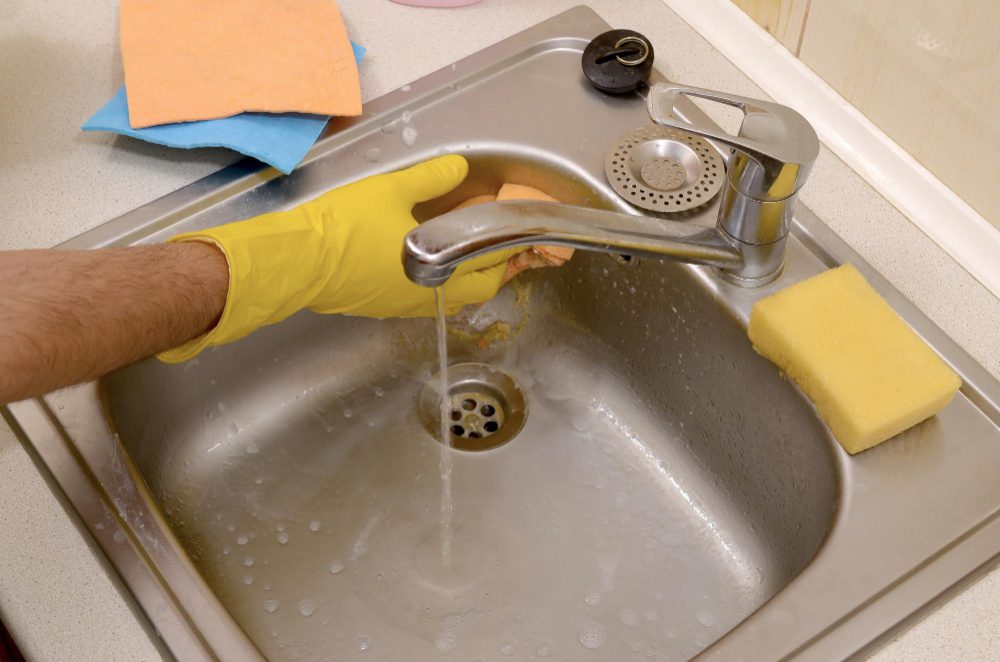
The kitchen sink is one of the hardest-working fixtures in the house. It handles dirty dishes, food scraps, greasy pans, muddy hands, and plenty of water every day. It is also one of the first places where a home can start to smell unpleasant when cleaning is put off.
A quick rinse is not the same as cleaning a sink. Food residue can collect around the drain, mineral deposits can build up around the faucet, and grime can hide under the rim or along the seams.
The best cleaning method depends on the material. Stainless steel, porcelain, composite, and stone sinks each have different care requirements. This guide explains how to clean a kitchen sink properly, how to remove stains and odors, and how to keep it cleaner between deep cleans.
Why Your Kitchen Sink Gets Dirty So Quickly
A sink is exposed to several types of mess at once.
Food particles can stick to the basin. Grease can form a thin film. Soap residue can leave a dull layer. Hard water can create white mineral spots around faucets and drains. Damp sponges and dishcloths can also contribute to unpleasant odors.
The drain is another issue. Organic material can collect inside the drain and trap, creating a place for bacteria and odor-causing buildup to develop.
That is why a good sink cleaning routine needs to cover more than the visible bowl.
What You Need
For most kitchen sinks, gather:
- Dish soap
- Warm water
- Microfiber cloths
- A soft sponge
- A soft-bristle brush or old toothbrush
- Baking soda for some surfaces
- White vinegar for compatible surfaces and mineral deposits
- A clean dry towel
Before using any cleaner, check the sink manufacturer’s instructions. Some materials can be scratched or damaged by products that are perfectly safe elsewhere.
How to Clean a Kitchen Sink Step by Step
Step 1: Clear the Sink
Remove dishes, food scraps, strainers, and other items.
Rinse away loose debris.
If there is a garbage disposal, remove any food sitting around the splash guard or sink opening.
Step 2: Clean the Faucet and Fixtures First
Start at the top.
Use warm soapy water and a microfiber cloth to wipe the faucet, handles, and surrounding area.
This prevents dirty water from running over a sink you have already cleaned.
For mineral deposits around the faucet, a compatible vinegar solution may help. Do not use vinegar on surfaces that your manufacturer says should not come into contact with acids.
Step 3: Wash the Basin
Apply a small amount of dish soap to a damp sponge or cloth.
Work around the entire basin, including the sides, corners, rim, and area around the drain.
Do not forget the underside of the faucet and the seams where the sink meets the counter.
Step 4: Rinse Thoroughly
Rinse away soap and loosened debris with clean water.
If the sink has a sprayer, use it to reach corners and the area around the drain.
Step 5: Dry the Sink
Drying is not just about appearance.
Leaving water on a sink allows mineral deposits to dry onto the surface. A quick towel dry after cleaning can reduce water spots and keep the sink looking polished.
How to Clean a Stainless Steel Sink
Stainless steel is durable, but it can scratch.
Start with warm water and dish soap. Use a soft sponge or microfiber cloth and follow the grain of the stainless steel.
For light stains, this is usually enough.
For stubborn residue, sprinkle a small amount of baking soda onto a damp cloth and gently work the area. Do not scrub aggressively.
Rinse thoroughly and dry with a clean towel.
Avoid steel wool, rough scouring pads, and abrasive powders that can leave scratches.
If your sink has a brushed finish, always wipe with the grain rather than making random circular motions.
For more detailed advice on stainless steel care, our guide on how to clean stainless steel appliances explains why following the grain and using minimal product helps prevent streaks and surface damage.
How to Clean a Porcelain Sink
Porcelain can be beautiful but may show stains easily.
Start with dish soap and warm water.
For light discoloration, use baking soda with water to create a soft paste. Apply it gently with a non-scratch sponge.
Avoid aggressive abrasives. Some porcelain surfaces have a glaze that can be dulled or scratched by harsh scrubbing.
For rust stains, do not immediately reach for a strong acid. Check the manufacturer’s recommendations for your sink finish first.
Rinse well and dry the sink after cleaning.
How to Clean a Composite Sink
Composite sinks can vary in material and finish, so the manufacturer’s care instructions matter.
For routine cleaning, warm water, mild dish soap, and a soft sponge are a safe starting point.
Avoid letting acidic cleaners, bleach, or abrasive products sit on the surface unless the manufacturer specifically recommends them.
If the sink has developed a dull film, clean it gently rather than trying to restore shine with a heavy-duty abrasive.
How to Clean a Stone Sink
Natural stone requires special care because some stone surfaces can react to acidic cleaners.
Do not assume vinegar is safe just because it works on other kitchen surfaces.
Use a stone-safe cleaner or mild soap and water according to the manufacturer’s instructions.
Dry the surface after cleaning to reduce water spots and mineral buildup.
If the stone is porous and has a protective seal, ask the manufacturer or installer how often it should be resealed.
How to Remove Kitchen Sink Smell
A bad smell usually means there is organic buildup somewhere.
Start with the visible drain opening.
Remove food particles and rinse the drain area thoroughly.
If the smell continues, clean the drain components that are accessible and check for buildup around the stopper or strainer.
For a simple maintenance treatment, hot water can help flush loose residue. Baking soda followed by vinegar is a commonly used household method, but it should not be treated as a substitute for physically removing heavy buildup.
If you have a garbage disposal, clean around the splash guard and check for trapped food.
Persistent odors can also point to a plumbing issue, a blocked trap, or a leak. If cleaning does not solve the smell, a plumber may need to inspect the drain system.
How to Clean the Sink Drain
The drain deserves attention because it is where food, grease, and soap residue disappear.
Start by removing the strainer or stopper if it is designed to come out.
Scrub the accessible surfaces with dish soap and a small brush.
Flush with hot water.
For recurring buildup, a drain brush can physically remove residue more effectively than repeatedly pouring products down the drain.
Do not mix commercial drain cleaners with vinegar, bleach, or other household chemicals.
If the drain is slow, repeatedly clogs, or smells even after cleaning, the problem may be deeper in the plumbing.
SHINENOS’s deep cleaning service can handle the surrounding kitchen surfaces, but plumbing blockages should be handled by a qualified plumber.
How to Remove Water Spots
Hard water can leave white or cloudy spots around the faucet and basin.
For stainless steel and other compatible surfaces, a diluted vinegar solution can help dissolve mineral deposits. Apply it to a cloth rather than flooding the sink, allow brief contact, then rinse thoroughly.
Never assume vinegar is safe for stone, marble, or other acid-sensitive surfaces.
Dry the sink after cleaning to reduce future spots.
How to Remove Grease From a Kitchen Sink
Grease responds well to dish soap.
Apply a small amount to a damp sponge and work over the greasy area.
If the grease is heavy, let warm soapy water sit in the basin for a few minutes before wiping.
Avoid pouring large amounts of cooking oil down the drain. Even if the sink appears to handle it, grease can accumulate farther down the plumbing and contribute to clogs.
How to Clean Around the Sink Rim
The narrow area where the sink meets the countertop is easy to miss.
Food particles, water, and soap can collect there.
Use a soft toothbrush or detail brush to clean the seam. Follow with a damp microfiber cloth.
If you notice dark staining, persistent moisture, or material deterioration around the rim, the issue may be more than surface dirt. A failing seal can allow water to enter the counter or cabinet area.
How to Clean a Sink With a Garbage Disposal
Start by turning off the disposal and following the manufacturer’s safety instructions.
Never put your hand into the disposal opening.
Remove visible debris with appropriate tools and clean around the splash guard.
A brush designed for garbage disposal cleaning can help reach areas that a sponge cannot.
If the disposal smells, the odor may be coming from food trapped under the splash guard rather than from the grinding chamber itself.
Run cold water during normal disposal use and avoid putting inappropriate items into the unit.
For a deeper disposal cleaning, follow the appliance manufacturer’s instructions rather than relying on household hacks.
How Often Should You Clean a Kitchen Sink?
For a busy household, a quick daily rinse and wipe is useful.
A more complete clean should happen several times a week, especially if you cook often.
Once a week, clean the faucet, basin, drain area, and sink accessories.
Every few weeks, inspect the drain, splash guard, seams, and hard-to-reach areas for buildup.
If you have a large family, cook frequently, or use the sink heavily, clean it more often.
A Five-Minute Daily Sink Routine
You do not need a major cleaning session every day.
After the last dishes are done:
- Remove food scraps.
- Rinse the basin.
- Wipe the faucet and handles.
- Wipe around the drain.
- Leave the sink dry.
That takes only a few minutes and prevents the buildup that makes weekly cleaning harder.
Common Kitchen Sink Cleaning Mistakes
Using Steel Wool on Stainless Steel
It can create visible scratches.
Leaving Vinegar on the Surface Too Long
Acidic cleaners can damage some finishes.
Ignoring the Drain
The basin can look spotless while the drain contains organic buildup.
Letting the Sink Stay Wet
Water spots and mineral deposits become more noticeable as water dries.
Pouring Grease Down the Drain
This can create plumbing problems later.
Using the Same Sponge for Everything
Sponges can collect food particles and bacteria. Clean or replace them regularly.
When Your Kitchen Needs More Than Sink Cleaning
A clean sink cannot make a kitchen feel truly clean if grease is covering the cabinets, appliance fronts, backsplash, and floors.
If the whole room needs a reset, a professional deep cleaning service can tackle the areas that are difficult to keep up with during a normal week.
For ongoing maintenance, recurring cleaning services can help keep the kitchen and the rest of the home under control.
SHINENOS serves homeowners across Minneapolis, Eden Prairie, Edina, Minnetonka, Plymouth, Maple Grove, Wayzata, Excelsior, and nearby West Metro communities.
You can also read our guide to getting rid of gnats in your house if small flies keep appearing around the kitchen drain, trash, or damp areas.
Frequently Asked Questions
What is the best thing to clean a kitchen sink with?
For most sinks, warm water, mild dish soap, and a soft sponge or microfiber cloth are a good starting point. The best cleaner depends on the sink material.
How do I clean a stainless steel sink without scratching it?
Use a soft cloth or non-scratch sponge and follow the grain. Avoid steel wool, rough scrubbers, and aggressive circular scrubbing.
Why does my kitchen sink smell bad?
Common causes include food buildup in the drain, residue around the stopper, a dirty garbage disposal, or a plumbing problem. Clean accessible areas first and contact a plumber if the smell persists.
Can I use baking soda to clean my sink?
Baking soda can help with some stains and residue, particularly on compatible surfaces. Use it gently because it is mildly abrasive.
Can vinegar damage a kitchen sink?
It can damage some materials, especially acid-sensitive stone. Always check the manufacturer’s instructions before using vinegar.
How often should I deep clean my kitchen sink?
A thorough weekly cleaning is a good baseline for many households. Heavy-use kitchens may need more frequent attention.
Final Takeaway
The best kitchen sink cleaning routine is simple: remove food, wash the basin, clean the drain area, wipe the faucet, rinse thoroughly, and dry the surface.
The material matters just as much as the method. Stainless steel needs scratch protection, porcelain needs gentle care, composite sinks need manufacturer-approved products, and natural stone should be protected from inappropriate acids.
A clean sink is a great start, but the rest of the kitchen matters too. Book SHINENOS cleaning services for a more thorough clean from the team that knows how to handle the details.