Knowing how to clean grout is one of those skills that looks simple until you’re face to face with years of discoloration that won’t budge. Then suddenly you can’t unsee it. The lines that used to be cream or white are now gray or brown, and no amount of wiping seems to make a difference because a regular cloth can’t actually get into the texture of porous grout to remove what’s embedded in it.
The good news is that cleaning grout doesn’t have to involve hours of hard scrubbing. It requires the right cleaning agent, enough dwell time, and a brush that reaches into the grout line. Get those three things right and you’ll see results in a fraction of the time most people spend on this task.
This guide covers the best way to clean grout for every situation, the grout cleaning products that work versus those that don’t, what to do about grout that’s stained beyond cleaning, and how to keep grout cleaner longer between deep cleans.
Why Grout Gets Dirty So Fast (and Why Most Cleaners Miss It)
Grout is porous. Unlike tile, which has a smooth sealed surface, grout lines absorb water, soap residue, body oils, mold spores, and any other substance that contacts them. The texture also traps dirt particles mechanically.
In bathrooms, the combination of moisture, soap, and organic material from skin and hair creates near-ideal conditions for mold and mildew growth in grout lines. The dark discoloration you see in bathroom grout is often mold, not just dirt, which is why regular surface wiping doesn’t address it.
In kitchens, floor grout accumulates cooking grease and food particles that bond with the grout surface over time. Kitchen grout discoloration tends to be brownish rather than the black of bathroom mold.
Understanding what’s causing the discoloration in your specific situation helps you choose the most effective cleaning approach.
What You Need Before You Start
Gather these supplies:
- A stiff-bristled grout brush (a dedicated grout brush or an old toothbrush)
- White distilled vinegar or a citric acid solution
- Baking soda
- Hydrogen peroxide (3%, the kind from the pharmacy)
- An oxygen bleach product like OxiClean (for white or light grout)
- Chlorine bleach (only for white grout, not colored grout)
- A spray bottle
- Microfiber cloths
- Rubber gloves and ventilation
You won’t need all of these for every situation. Start with the gentler options and escalate if needed.
Method 1: Baking Soda and Vinegar — Best Way to Clean Grout for Moderate Buildup
This is the most popular DIY approach and it works well on moderate grout discoloration without harsh chemicals.
Step 1: Apply a paste of baking soda and water directly to the grout lines. Use enough to coat the grout without it falling off.
Step 2: Spray white vinegar onto the baking soda. It will fizz. The fizzing action helps loosen material embedded in the porous grout.
Step 3: Let it sit for five to ten minutes.
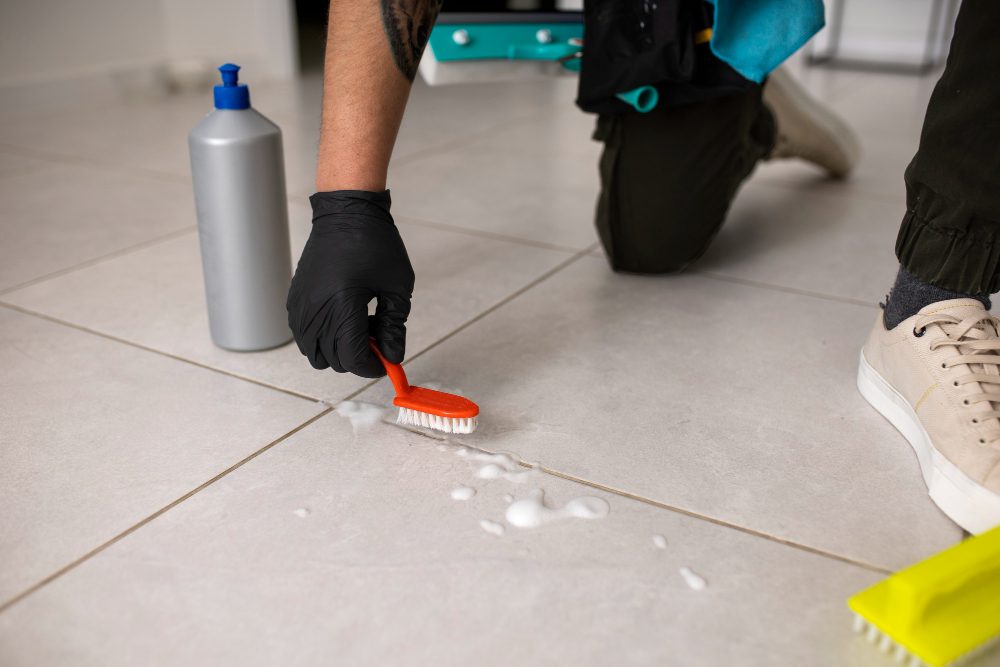
Step 4: Scrub with a stiff grout brush. Work in short strokes along the grout line rather than across the tile.
Step 5: Rinse thoroughly with warm water and wipe dry.
This method works well for maintenance cleaning and moderate discoloration. For heavily stained or moldy grout, you’ll need to step up to a stronger approach.
One note: do not use vinegar on natural stone tile (marble, travertine, limestone). The acid damages the stone surface. For natural stone, use a pH-neutral grout cleaner instead.
Method 2: Hydrogen Peroxide — Grout Cleaning Products That Work on Mold
Hydrogen peroxide is effective at killing mold and mildew in grout without the harshness of chlorine bleach. It’s a good choice for bathrooms where mold is the primary issue.
Step 1: Apply 3% hydrogen peroxide directly to the grout using a spray bottle or by pouring it along the lines.
Step 2: Let it sit for ten to fifteen minutes. The peroxide needs dwell time to penetrate and kill mold spores.
Step 3: Scrub with a grout brush.
Step 4: Rinse completely and dry.
For a stronger paste, mix hydrogen peroxide with baking soda into a thick consistency. Apply to the grout, let sit for fifteen to twenty minutes, scrub, and rinse. This combination handles moderate to heavy mold staining effectively.
Method 3: Oxygen Bleach — How to Whiten Grout With Heavy Staining
Oxygen bleach, sold as OxiClean or similar products, is one of the most effective grout cleaners available. It’s less harsh than chlorine bleach, safe for colored grout (check the label), and particularly effective on organic staining.
Step 1: Mix the oxygen bleach powder with warm water according to the product directions. The solution should be fairly concentrated for grout cleaning.
Step 2: Apply the solution generously to the grout. Let it soak for fifteen to thirty minutes. Don’t let it dry on the surface.
Step 3: Scrub with a grout brush. The brush is essential: the cleaning agent loosens the material, the brush removes it.
Step 4: Rinse thoroughly with clean water.
Oxygen bleach works well as an overnight treatment for floors. Apply a concentrated solution to floor grout, cover with plastic wrap or old towels to prevent drying, and let it soak overnight. Scrub and rinse in the morning.
Method 4: Chlorine Bleach (For White Grout Only)
Chlorine bleach is effective on white or near-white grout for removing mold and restoring brightness. It should not be used on colored or dark grout, since it will fade the color, and it should never be mixed with vinegar, ammonia, or other cleaners.
Apply diluted bleach (one part bleach to three parts water) to white grout using a brush or spray bottle. Let sit for five to ten minutes. Scrub and rinse completely. Ensure good ventilation when using bleach.
Use this method selectively. Frequent bleach use can break down grout over time. It’s a reset tool, not a routine cleaner.
Method 5: Steam Cleaning (Effective and Chemical-Free)
A steam cleaner delivers high-temperature steam that kills mold, loosens grease and deposits, and penetrates grout pores without chemicals. This is a preferred method for households that want to minimize chemical use, and it works well on all tile types including natural stone.
The limitation is that you need a steam cleaner, which most households don’t own. Professional cleaning services typically have commercial-grade steam cleaning equipment that is significantly more effective than consumer units.
If you’re considering this approach at home, look for a steam cleaner with a grout attachment or nozzle that focuses the steam precisely on the grout line rather than dispersing it broadly.
Floor Grout vs Wall Grout: What’s Different
Floor grout cleaning requires a different approach than wall grout because you’re working with horizontal surfaces.
On floors, cleaning solution stays in place without running off, which means you can soak large areas effectively. Mixing a cleaning solution in a bucket and pouring it across the floor, letting it dwell for fifteen to thirty minutes, and then scrubbing with a stiff-bristled floor brush or a grout brush is efficient for large tiled floors.
On walls, solutions run off quickly. The paste methods (baking soda paste, hydrogen peroxide and baking soda paste) work better for vertical surfaces because they stay in contact with the grout longer. Apply the paste, cover with plastic wrap pressed against the wall if needed to extend dwell time, then scrub and rinse.
How to Keep Grout Cleaner Between Deep Cleans
Cleaning grout is satisfying when it’s done. Here’s how to slow the return of discoloration.
Seal the grout. Clean grout should be sealed with a penetrating grout sealer to reduce its porosity. Sealed grout absorbs less water, soap, and organic material, which means it stays cleaner and resists mold more effectively. Sealing takes about thirty minutes for a standard bathroom and should be repeated every one to two years.
Ventilate the bathroom. Run the exhaust fan during and for twenty minutes after showers. Mold needs moisture to grow. Reducing moisture in the bathroom after each use is the most effective prevention.
Squeegee tile walls after showering. Removing most of the water from tile and grout after each shower reduces the evaporation cycle that deposits soap and minerals.
Use a weekly grout spray. A light application of a diluted hydrogen peroxide or commercial daily shower spray once a week keeps mold from establishing between deeper cleaning sessions.
Dry mop tile floors regularly. Floor grout stays cleaner when food particles and debris are removed from the surface before they can be worked into the porous grout lines.
When Cleaning Isn’t Enough: Replacing Grout
There are situations where grout cannot be restored by cleaning:
Grout that has physically cracked, crumbled, or separated from the tile needs to be removed and replaced. Cleaning discolored but structurally sound grout is worthwhile. Cleaning crumbling grout is not.
Very deep, permanent staining from certain substances (rust, some dyes) may not respond to any cleaning method. In this case, the grout can be removed and replaced with fresh grout.
Grout recoloring products are also an option for grout that’s clean but discolored. These penetrating colorants coat the grout and restore or change its color without full replacement.
Professional Grout Cleaning in Minnesota: When It Makes Sense
For bathrooms where the grout hasn’t been cleaned in years, where mold has been established for a long time, or where the tile area is large, professional grout cleaning gets better results than DIY in less time.
Professional cleaners use commercial-grade cleaning agents, steam cleaning equipment, and scrubbing tools that penetrate grout more effectively than what’s available to most homeowners. They also know which cleaning method is appropriate for each tile type, which matters significantly for natural stone.
Our deep cleaning service covers grout scrubbing in bathrooms and kitchens as part of the full scope. For homes in Minnesota that need a thorough baseline clean, professional grout cleaning is often the most efficient approach before transitioning to regular maintenance.
SHINENOS serves the Twin Cities metro, including Eden Prairie, Minneapolis, Edina, Minnetonka, Plymouth, Maple Grove, Excelsior, and Wayzata.
Frequently Asked Questions
What is the best homemade grout cleaner?
A paste of baking soda and hydrogen peroxide is the most effective homemade option for bathroom grout. Apply to grout lines, let sit for fifteen to twenty minutes, scrub with a grout brush, and rinse. It handles both mineral deposits and mold without damaging colored grout.
How do professionals clean grout?
Professional grout cleaning typically involves commercial-grade alkaline or enzymatic cleaners applied with dwell time, followed by rotary scrubbing tools or steam cleaning that penetrate grout more deeply than hand scrubbing. The equipment and products available to professionals produce results that are difficult to match with DIY methods.
Can I use a toothbrush to clean grout?
Yes. An old toothbrush works well for grout lines between smaller tiles and in corners. For floor grout over large areas, a dedicated grout brush with a longer handle is significantly more efficient.
How often should grout be cleaned?
Bathroom grout benefits from a weekly light spray with a preventive solution and a thorough scrub monthly. Kitchen floor grout typically needs deep cleaning every one to three months depending on cooking frequency.
Will bleach whiten grout permanently?
Bleach restores brightness to white grout temporarily, but the whitening effect is not permanent. Grout that hasn’t been sealed will re-soil and discolor again. Sealing after cleaning extends the time between deep cleans noticeably.
How long does grout cleaning take for a full bathroom?
A thorough DIY grout cleaning of a standard bathroom, including application, dwell time, scrubbing, and rinsing, takes one to two hours. Professional teams work faster with better equipment.
Issteam cleaning safe for all grout?
Steam is safe for most grout and all tile types including natural stone. It’s one of the few effective cleaning methods that can be used on marble and travertine without risk of etching.
Get Your Grout Looking Clean Again
Whether you’re using the best way to clean grout yourself or ready to hand it to a professional grout cleaning service in Minnesota with the methods in this guide or ready to hand it off, clean grout makes a visible difference in how your bathroom and kitchen look and feel.
For a thorough professional grout clean as part of a full home deep cleaning, book with SHINENOS. We cover grout, tile, and every other area of your home to a standard that regular cleaning doesn’t reach.