Most people never stop to ask how often should you clean your house on a proper schedule. The problem is that by the time something looks dirty, it’s been dirty for a while. Bacteria have been building up on your kitchen counters. Dust mites have been multiplying in your bedding. Grease has been quietly hardening on your stovetop.
A cleaning schedule removes the guesswork. You don’t have to decide what needs attention because the schedule already tells you. It’s one of those small systems that makes daily life noticeably easier without requiring much effort to maintain.
This guide breaks down exactly how often each room and each task needs attention, giving you a practical house cleaning schedule based on how your home is actually used, not a one-size-fits-all answer.
Why a Cleaning Schedule Matters More Than You Think
There’s a reason professional cleaning companies operate on fixed schedules. A consistent weekly cleaning routine is faster and more effective than sporadic deep cleans. Consistent cleaning at the right frequency is faster and more effective than sporadic deep cleans. A kitchen that gets wiped down daily takes about five minutes to clean. A kitchen that hasn’t been touched in two weeks takes forty-five.
According to the American Cleaning Institute, homes that are cleaned on a regular schedule have meaningfully lower levels of household allergens, including dust mites, pet dander, and mold spores, compared to homes that are cleaned reactively.
The goal isn’t a spotless home at every moment. It’s a home that stays manageable, healthy, and presentable without requiring a full day of effort every time guests are coming over.
Daily Tasks: Five to Fifteen Minutes (Your Non-Negotiable Routine)
Some tasks need to happen every day to prevent bigger problems from developing. None of these take long individually.
- Wipe down kitchen counters after cooking
- Wash or load dishes rather than letting them sit
- Wipe the stovetop after use, especially if anything splattered
- Squeegee the shower glass or wipe the shower walls after your last use of the day (this alone prevents most soap scum buildup)
- Quick wipe of the bathroom sink
- Make beds
- Pick up and put away items left out during the day
These aren’t deep cleaning tasks. They’re five to fifteen minutes total and they prevent the kind of buildup that turns a manageable weekend clean into a serious undertaking.
Weekly Tasks: How Often to Clean Each Room
Weekly cleaning covers the tasks that accumulate at a rate most people can feel. Dust on furniture, grime in bathroom fixtures, and floors that have collected a week of foot traffic all need attention on a weekly or near-weekly basis.
Kitchen
The kitchen gets heavy daily use and needs the most consistent weekly attention.
- Wipe down all countertops thoroughly, not just the area near the stove
- Clean the stovetop including the areas around the burners
- Wipe down appliance exteriors: refrigerator front, microwave outside, dishwasher front
- Scrub the sink and shine the faucet
- Wipe down cabinet fronts, particularly around handles where grease and grime collect
- Sweep and mop the floor (how often to mop floors depends on traffic, but weekly is the baseline for kitchens)
- Empty the trash and wipe the inside of the trash can if needed
Bathrooms: How Often to Clean Your Bathroom
Knowing how often to clean your bathroom is one of the most common questions homeowners have. The answer is weekly for every household. Homes with multiple users, children, or heavy bathroom traffic may need attention twice a week.
- Scrub the toilet bowl and wipe down the outside including the base
- Clean the sink and faucet
- Wipe down the mirror
- Clean the tub or shower (this can stretch to every ten days if you’re squeegeeing after each use)
- Mop the floor
- Replace used hand towels
Living Areas
- Vacuum carpets and rugs
- Dust furniture surfaces, shelves, and electronics
- Wipe down remote controls and frequently touched surfaces
- Quick clean of light switches and door handles
Bedrooms
- Vacuum or sweep floors
- Dust nightstands and dressers
- Tidy closet floors and any surfaces that accumulate clutter
Every Two Weeks: The Tasks Most People Skip
These are the areas that don’t scream for attention but that make a real difference in how clean a home actually feels.
- Vacuum upholstered furniture (sofas, chairs, cushions)
- Wipe down baseboards in high-traffic areas
- Clean microwave interior
- Wipe the inside of the refrigerator door seals
- Clean the bathroom exhaust fan cover
- Wash shower curtain liner if applicable
- Vacuum under beds and behind furniture
If you follow a professional cleaning frequency Minnesota homeowners use most often, biweekly visits, these tasks are typically part of the scope. Our recurring cleaning service covers these areas consistently so you don’t have to track them yourself.
Monthly Tasks: Deeper Attention
Monthly cleaning addresses the areas that accumulate slowly but that need regular attention to stay in good condition.
- Clean inside the microwave thoroughly
- Wipe down all cabinet fronts in kitchen and bathrooms
- Clean the dishwasher filter and interior
- Scrub bathroom tile grout
- Wipe down all baseboards throughout the home
- Clean ceiling fans (top of blades, not just the visible underside)
- Wipe window sills and window tracks
- Vacuum refrigerator coils if accessible
- Clean the range hood filter
- Wash bed pillows (check care label)
These tasks take longer individually but happen infrequently enough that they don’t feel burdensome when they’re on a planned schedule.
Seasonally (Every Three to Four Months): The Full Reset
Seasonal cleaning, sometimes called a deep clean, addresses everything the monthly routine doesn’t reach. Most households need this level of cleaning two to four times a year.
- Clean inside the oven completely
- Clean inside the refrigerator including all shelves, drawers, and door seals
- Wash all windows inside
- Clean behind and under major appliances
- Wash curtains or wipe down blinds
- Flip or rotate mattresses
- Clean light fixtures and lampshades
- Clean inside all cabinets and drawers throughout the home
- Wash or dry clean heavy blankets and comforters
- Clean the dryer vent
Minnesota homeowners often time seasonal deep cleans with the end of winter (removing the buildup from months of closed windows and heavy indoor use) and before the holiday season in fall. Our deep cleaning service is designed for exactly these moments.
Room-by-Room Frequency Reference
Kitchen
| Task | Frequency |
| Wipe counters | Daily |
| Stovetop | After each use |
| Sweep and mop | Weekly |
| Appliance exteriors | Weekly |
| Microwave interior | Monthly |
| Inside refrigerator | Every 1-2 months |
| Inside oven | Seasonally |
| Behind appliances | Seasonally |
Bathrooms
| Task | Frequency |
| Sink and faucet | Daily or weekly |
| Toilet | Weekly |
| Shower/tub | Weekly to every 10 days |
| Mirror | Weekly |
| Floor | Weekly |
| Grout | Monthly |
| Exhaust fan | Monthly |
Bedrooms
| Task | Frequency |
| Vacuum/sweep | Weekly |
| Dust surfaces | Weekly |
| Change bed sheets | Every 1-2 weeks |
| Wash pillows | Monthly |
| Ceiling fan blades | Monthly |
| Under-bed vacuum | Every 2 weeks |
| Windows | Seasonally |
Living Areas
| Task | Frequency |
| Vacuum floors | Weekly |
| Dust surfaces | Weekly |
| Vacuum upholstery | Every 2 weeks |
| Baseboards | Monthly |
| Ceiling fans | Monthly |
| Windows | Seasonally |
| Behind furniture | Seasonally |
How Household Size and Lifestyle Affect Frequency
The schedule above is a baseline for an average household. Several factors push the frequency up.
Pets. Dog and cat hair accumulates on floors, furniture, and in HVAC filters faster than most people expect. Homes with pets typically need vacuuming two to three times a week rather than once and benefit from more frequent bathroom and floor cleaning throughout.
Young children. Kitchens and bathrooms in homes with young children need more frequent attention. Surfaces that get touched constantly with sticky hands, floors that see more food debris, and bathrooms that get heavier use all need more frequent cleaning than the baseline.
High-traffic homes. If your home is used heavily, entertaining regularly, or has multiple people coming and going, the accumulation rate of dust, grime, and debris is higher. Adjust frequency accordingly.
Allergy and asthma management. According to the Asthma and Allergy Foundation of America, regular cleaning is one of the most effective environmental controls for reducing asthma and allergy triggers. For households where this is a concern, weekly vacuuming with a HEPA filter, more frequent bedding washing, and regular bathroom cleaning become more important than in the average home.
When Professional Cleaning Fits Into the Schedule
Professional cleaning doesn’t replace your daily and weekly habits. It supplements them by handling the tasks that are time-consuming, physically demanding, or easy to skip in a personal cleaning routine.
The most common approach that works well for Minnesota homeowners is:
Handle daily and light weekly tasks yourself (wiping counters, dishes, quick bathroom wipe-downs) and bring in a professional service biweekly or monthly for the full clean. The professional visit covers floors, bathrooms, kitchen surfaces, dusting, and the items that tend to get skipped in a personal routine.
Supplement with a seasonal deep clean two to four times a year for the oven, refrigerator interior, inside cabinets, behind appliances, and the full baseboard and ceiling fan treatment.
SHINENOS serves homeowners across Eden Prairie, Edina, Minneapolis, Minnetonka, Plymouth, Maple Grove, Wayzata, and Excelsior with both recurring maintenance cleaning and full deep cleans.
Building a Cleaning Routine That You’ll Actually Stick To
The best cleaning schedule is one that fits your actual life, not an ideal version of it. A few things that help.
Keep cleaning supplies where you use them. A bathroom with a toilet brush and a spray cleaner under the sink gets cleaned more often than one where you have to walk to another room to get supplies.
Batch similar tasks. Instead of cleaning one bathroom at a time on different days, clean all bathrooms on the same day. The mindset is already there and it takes less total time.
Set a weekly anchor. Choose one day as your main cleaning day and do the bulk of weekly tasks then. Even if it shifts by a day occasionally, the anchor keeps you on track.
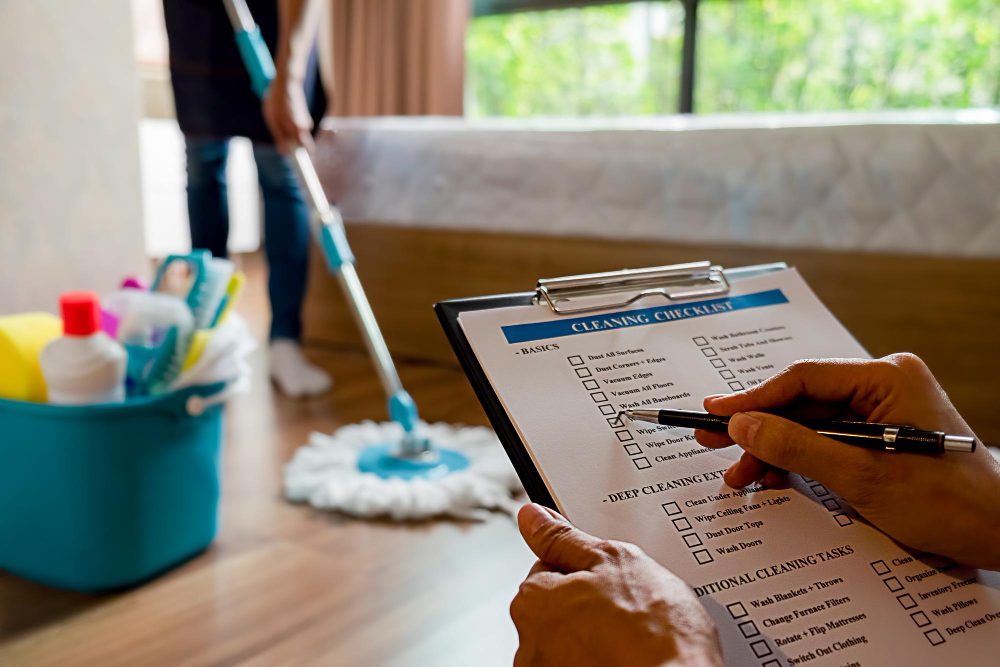
Use a checklist. Simple as it sounds, a posted checklist prevents the feeling of “I don’t know where to start” and helps you track what’s been done.
Frequently Asked Questions
How often should you deep clean your house?
For most households, a thorough deep clean two to four times a year is appropriate. Homes with pets, young children, or frequent entertaining may benefit from more frequent deep cleans. The goal is to address the areas that a regular cleaning routine doesn’t consistently reach.
How often should you change your bed sheets?
Every one to two weeks is the standard recommendation. The Sleep Foundation notes that sheets accumulate skin cells, sweat, and dust mites quickly, making weekly or biweekly washing an important hygiene practice.
Is cleaning once a week enough?
For most single or couple households without pets, a thorough weekly clean is sufficient when combined with daily habit tasks like wiping counters and doing dishes. Larger households with children or pets typically benefit from more frequent cleaning in key areas.
What happens if you don’t clean your house regularly?
Irregular cleaning leads to buildup that becomes harder and more time-consuming to address over time. Beyond the aesthetic issue, it creates genuine health concerns: dust mite populations increase in bedding, mold develops in bathrooms, and bacteria accumulate on kitchen surfaces.
How long should it take to clean a house?
A three-bedroom home cleaned thoroughly takes two to four hours for a solo cleaner. Professional teams work faster due to efficient systems and task splitting. A well-maintained home cleaned regularly takes less time each visit than one that’s been left for several weeks.
Should I clean before or after a professional cleaning service visits?
Tidying up clutter, dishes, and personal items before the cleaning team arrives means more of their time goes toward actual cleaning rather than working around disorder. You don’t need to pre-clean surfaces, that’s what you’re hiring them for.
How often should carpets be professionally cleaned?
It recommends professional carpet cleaning every twelve to eighteen months for average households, more frequently for homes with pets or heavy foot traffic.
Take the Guesswork Out of Cleaning
Knowing how often you should clean your house, and following a consistent house cleaning schedule, makes your home easier to maintain and more consistently clean without requiring heroic effort. Start with the daily and weekly tasks, build from there, and schedule professional help for the heavier work.
SHINENOS offers recurring cleaning on weekly, biweekly, and monthly schedules, and deep cleaning for the seasonal resets. Book your cleaning today and let us handle the schedule.