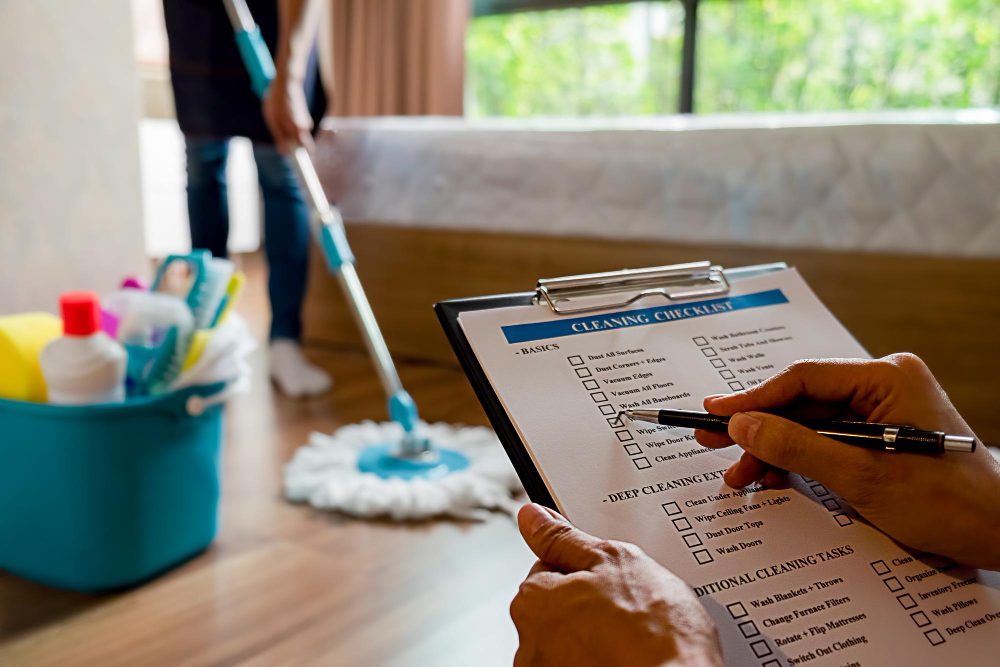
Let’s be honest about something. Most people clean their homes regularly. They vacuum, they wipe down counters, they scrub the toilet. But there’s a whole category of cleaning that doesn’t happen during a regular session, and it builds up quietly in every home until the day you move a piece of furniture or pull the stove out and realize you’ve been living with years of accumulated grime you couldn’t see.
That’s what a deep cleaning is for.
A deep cleaning checklist is different from a regular cleaning checklist. It’s not about maintenance. It’s about resetting every surface in your home to a clean baseline, including the areas that don’t get touched during routine cleaning: inside appliances, grout lines, ceiling fans, window tracks, baseboards, behind appliances, and all the forgotten corners that gather dust and bacteria over months or years.
This is the complete room-by-room deep cleaning checklist for Minnesota homeowners, with notes on what professionals do differently in each space and when a professional deep cleaning service is the right call.
What Makes a Deep Cleaning Different From a Regular Cleaning
The difference comes down to scope and frequency.
A regular cleaning maintains a home that’s already in reasonable condition. It covers visible surfaces, floors, bathrooms, and the kitchen in about two to three hours. A deep cleaning goes into every area a regular clean skips, takes significantly longer, and is typically done seasonally rather than weekly.
The key areas that separate a deep clean from a standard clean:
- Inside the oven, refrigerator, and dishwasher
- Inside all kitchen and bathroom cabinets and drawers
- Grout lines throughout the bathroom and kitchen
- Baseboards in every room
- Ceiling fan blades (the top surface, not just underneath)
- Window tracks and sills throughout the home
- Behind and underneath all major appliances
- Light fixtures and exhaust fan covers
- Interior window cleaning
- Closet shelves and rods
Most Minnesota households benefit from a full deep clean two to four times per year. Many time this around the end of winter (April or May) and before the holiday season in fall, when the home has been through heavy use and needs a thorough reset.
Supplies You Need Before Starting
Gather these before you start a single room. Running to get supplies mid-clean kills momentum.
- Microfiber cloths (at least six to eight, they get dirty fast)
- Stiff-bristled grout brush and old toothbrushes
- All-purpose cleaner
- Degreaser (separate from all-purpose, especially for the kitchen)
- Bathroom disinfectant
- Oven cleaner
- Baking soda and white distilled vinegar
- Hydrogen peroxide (3%)
- Glass cleaner
- HEPA-filter vacuum with attachments
- Mop with appropriate cleaner for your floor type
- Trash bags, rubber gloves, and a step stool
One rule that saves time: always work top to bottom in every room. Ceiling fans and light fixtures first, floors last. Dust and debris fall downward, so cleaning in the wrong order means cleaning floors twice.
Room-by-Room Deep Cleaning Checklist
How to Deep Clean a Kitchen
The kitchen is the most time-consuming room in any deep clean. It also makes the most difference when it’s done properly.
Appliances (inside and out):
- Clean inside the oven completely, including the door glass and the hidden cavity under the bottom panel. For heavy baked-on grease, use an oven cleaner and let it dwell overnight
- Clean inside the refrigerator: all shelves, drawers, and door seal pockets. Pull items out, wipe everything down, check for expired food
- Defrost the freezer if there’s significant ice buildup
- Clean the dishwasher interior, the filter at the bottom, and the door seal. Run an empty hot cycle with a dishwasher cleaner after
- Clean inside the microwave using a steam method: bowl of water and vinegar heated on high for five minutes, then wipe
- Degrease the range hood filter (soak it in hot water with dish soap and baking soda for 30 minutes, then scrub)
Cabinets and storage:
- Empty every cabinet and drawer. Wipe the interior with a damp cloth
- Degrease cabinet fronts, especially near the stove where cooking vapor accumulates
- Wipe down all cabinet handles and hardware
- Go through the pantry and discard expired items
Surfaces and sink:
- Degrease the walls behind the stove (this is almost always worse than expected)
- Clean the backsplash tiles and scrub the grout lines
- Scrub the sink basin, clean the faucet and aerator, polish the fixtures
- Clean the garbage disposal (ice cubes and kosher salt is the professional trick for blade cleaning)
- Wipe down all countertops including the backsplash behind them
Floors:
- Pull out the refrigerator, stove, and dishwasher if accessible
- Clean behind and underneath each one
- Sweep and mop the full floor including corners and the area under the toe kicks of the cabinets
When to call a professional for kitchen deep cleaning: If the range hood filter is completely blocked, grease has built up on the walls over months, or the oven hasn’t been cleaned in over a year, a professional kitchen deep cleaning will get results a DIY session won’t match in a reasonable amount of time.
How to Deep Clean a Bathroom
Bathrooms are where most people focus during a regular clean. A deep clean goes several layers further.
Shower and tub:
- Remove soap scum from shower glass using an acid-based cleaner (white vinegar or a commercial product) with proper dwell time. Don’t spray and wipe immediately. Let it sit for 15 minutes minimum
- Scrub tile grout with a stiff brush and a baking soda paste or hydrogen peroxide. Grout is porous and holds mold spores even when tile looks clean
- Descale the showerhead: fill a plastic bag with white vinegar, submerge the showerhead, and leave overnight. This removes mineral deposits that reduce water pressure and can harbor bacteria
- Replace or wash the shower curtain liner if it has mold or buildup
- Clean the caulk lines and inspect for cracking. Cracked caulk lets water behind the tile, which creates serious moisture problems over time
- Clean the drain cover and remove any hair buildup inside the drain
Toilet:
- Scrub the bowl including under the rim where bacteria concentrate
- Clean the exterior: seat, lid, tank, base, and the area of the floor immediately around the toilet base
- Remove the toilet seat and clean the hinges and the bolts underneath
- Wipe behind the toilet, which is one of the most consistently missed spots in home cleaning
Vanity and fixtures:
- Clean inside the medicine cabinet and all drawers
- Wipe down the vanity interior and the area under the sink (check for moisture or slow drip stains while you’re in there)
- Descale faucets using vinegar-soaked cloths
- Clean the mirror with streak-free glass cleaner
- Wipe down the exhaust fan cover. Remove it and vacuum or wash it if heavily clogged (a clogged fan doesn’t remove moisture effectively, which contributes to bathroom mold)
Floors and walls:
- Mop the floor including behind the toilet and under the vanity
- Wipe down baseboards
- Clean light fixtures and replace burned-out bulbs
When to call a professional for bathroom deep cleaning: Heavy grout staining that’s been building for years, mold that returns after cleaning (which may indicate moisture in the wall), or multiple bathrooms that need the full treatment are all situations where a deep cleaning service handles it in one visit rather than a full day of DIY effort.
Bedrooms: Deep Cleaning Checklist
Bedrooms collect dust more than most people realize, especially in the areas that aren’t visible during daily use.
- Wash all bedding: sheets, pillowcases, duvet covers, comforters, and pillow protectors
- Vacuum the mattress surface and sides using the upholstery attachment
- Flip or rotate the mattress
- Move the bed and clean underneath thoroughly. This is typically a significant accumulation of dust and debris
- Clean inside the closet: wipe all shelves, rods, and the floor. Sort and donate anything unused
- Wash curtains or vacuum fabric blinds; wipe hard blinds
- Clean window sills and tracks
- Dust all furniture surfaces including tops of dressers, nightstands, and the headboard
- Wipe baseboards throughout the room
- Clean ceiling fan blades (the top surface, which most people never touch)
- Clean light fixtures and replace bulbs as needed
- Vacuum the floor including corners and under the bed
Living Room and Common Areas
Living areas accumulate dust on surfaces that see daily use but are rarely deeply cleaned.
- Move sofas, chairs, and other furniture and vacuum the floor underneath
- Vacuum all upholstered furniture: cushions, underneath the cushions, and the crevices along the frame
- Dust and wipe all furniture surfaces including the tops of bookshelves and entertainment centers
- Wipe down all electronics. For screens, use a dry microfiber cloth. For remotes, game controllers, and keyboards, disinfecting wipes work well
- Dust bookshelves and remove books to wipe the shelf surface underneath
- Clean window sills and tracks throughout
- Wipe all light switches, outlet covers, and door handles throughout the home
- Clean ceiling fan blades
- Wipe baseboards throughout
- Clean light fixtures and lampshades
- Vacuum or wash drapes and curtains
Entryway and Mudroom
In Minnesota, entryways take serious abuse during winter. Salt, sand, boot moisture, and tracked-in debris accumulate throughout the season.
- Remove and wash all entry rugs and doormats
- Scrub the floor, especially salt residue that has built up near the door
- Clean the front door inside and out, including the frame and around the handles
- Wipe down all coat hooks, bench surfaces, and shelving
- Clean shoe storage and wipe shelves
- Inspect weather stripping on the door for wear. Worn weather stripping lets cold air in and drives up heating costs
Home Office
Home offices are underrated as dust collectors. Electronics generate static that attracts dust, and cabinets fill up fast.
- Wipe down the desk surface and all equipment
- Use compressed air on keyboards, then wipe keys with a barely damp cloth
- Wipe monitor and screen surfaces with a dry microfiber cloth
- Dust all shelving and surfaces
- Organize and file or shred accumulated paper
- Vacuum or mop the floor
- Wipe baseboards and window sills
Laundry Room
- Run a washing machine cleaning cycle using a commercial cleaner or a cup of white vinegar and baking soda
- Clean the door seal on a front-loading washer. This is a prime mold location that most people never address
- Wipe down the exterior of both machines
- Clean the dryer lint trap thoroughly and vacuum the duct leading to the exterior. A clogged dryer vent is a fire hazard. The S. Fire Administration reports that failure to clean the dryer is the leading cause of home dryer fires
- Check and clean the dryer vent from the exterior of the house if accessible
- Wipe shelving and the walls around the machines
- Mop the floor including behind the appliances
Basement and Storage Areas
Minnesota’s freeze-thaw spring cycle makes basement inspection a post-winter priority.
- Check for any moisture intrusion or new cracks in foundation walls. The freeze-thaw cycle in Minnesota puts unusual stress on foundations each spring
- Clean up winter storage and reorganize
- Replace the HVAC filter. This is one of the most important tasks in any spring deep clean. A filter that’s run all winter is carrying the accumulated dust of an entire heating season
- Check window well drains if applicable
- Inspect the water heater for corrosion or signs of leaks
Garage
- Sweep the full floor thoroughly
- Scrub road salt and de-icer residue from the concrete. In Minnesota, this is substantial after a typical winter
- Wipe down all shelving and storage units
- Dispose of old chemicals, expired motor oil, and winter supplies no longer needed
- Check and clean garage door tracks and sensors
- Inspect weather stripping around the garage door
Professional Deep Cleaning vs DIY: Honest Comparison
There’s a point in every room where the honest answer is: a professional does this better and faster.
The time alone is significant. A thorough deep clean of a 2,000 sqft home done properly by one person takes a full weekend. For most households, that’s not realistic time to spend, and a rushed deep clean misses the areas that need the most attention.
Professional cleaners work more efficiently because they’ve done this hundreds of times. They know where buildup concentrates (the range hood filter, the door seal on the dishwasher, the exhaust fan in the bathroom). They carry the right products for each surface type and use dwell times that most people skip because they’re impatient to see results. They also have commercial-grade equipment that performs differently from what’s available in grocery stores.
For specific situations, professional deep cleaning is clearly the right call:
A first-time professional clean of a home that hasn’t been deep cleaned in over a year. The scope and time involved is beyond what most people can efficiently tackle themselves.
Move-out cleaning, where the standard required to satisfy a landlord is higher than a general deep clean. Our move-in/move-out cleaning covers this specifically.
Pre-listing home cleaning before a sale. First impressions in a home sale matter significantly and a professional deep clean before photography and showings makes the property present better.
Post-renovation cleaning. Drywall dust, adhesive residue, and construction debris require a different approach than standard deep cleaning.
Minnesota-Specific Deep Cleaning Notes
Minnesota homes have specific cleaning challenges that a generic checklist doesn’t address.
Post-winter reset (April/May): After five to six months of closed windows and continuous heating, homes have accumulated dust in HVAC systems, on surfaces that haven’t had fresh air circulation, and in entryways from months of winter traffic. The post-winter deep clean is the most important of the year for most Minnesota households.
HVAC filter replacement: Replace the furnace filter before the first air conditioning use of the season. This is typically April or May in the metro area. Running a first AC cycle through a spent furnace filter circulates a season’s worth of accumulated dust through your home.
Hard water: The Twin Cities metro area has moderately hard to very hard water depending on the municipality and source, which is why mineral deposits on faucets, showerheads, and glass surfaces are more significant here than in many other regions. White vinegar is effective on light deposits. For heavy buildup, a commercial descaling product handles what vinegar cannot.
Salt and road chemicals: Every Minnesota winter means road salt, sand, and de-icing chemicals tracked into entryways and garages. These are corrosive to floors and need proper removal rather than just sweeping.
How Often Should You Deep Clean in Minnesota?
For most households, the standard recommendation is two to four times per year. Here’s a practical schedule:
Spring (April or May): The most important deep clean of the year. Post-winter reset for the whole home. Replace HVAC filter. Address salt residue in entryways and garage. Full home deep clean.
Pre-holiday (October or November): Before the holiday season when guests visit and the home gets heavy use. Kitchen and bathrooms especially.
Mid-summer (July): Optional for most households. Needed for homes with high traffic, multiple pets, or frequent entertaining.
Move-in or pre-listing: Any time the home changes occupancy or goes on the market.
Our recurring cleaning service maintains the result between deep cleans, so each seasonal deep clean starts from a better baseline.
Frequently Asked Questions
What is a deep cleaning checklist?
A deep cleaning checklist is a room-by-room list of every cleaning task in a home beyond what a regular maintenance clean covers. It includes inside appliances, grout scrubbing, baseboards, ceiling fans, window tracks, inside cabinets, and all areas that accumulate buildup over months.
How long does a deep cleaning take?
A thorough deep clean of a 2,000 to 2,500 sqft home takes a professional team four to six hours. A solo homeowner doing it properly typically takes eight to twelve hours spread across a weekend.
What does a professional deep cleaning service include?
A professional deep clean covers everything a standard clean does plus inside all appliances, grout lines, baseboards throughout, ceiling fans, window tracks and sills, inside cabinets and drawers, behind and under major appliances, and light fixtures. SHINENOS’s deep cleaning service covers the full scope.
How often should I deep clean my house in Minnesota?
Twice a year is the minimum for most Minnesota households, with spring and pre-holiday being the most logical timing. Homes with pets, young children, or frequent guests benefit from three or four deep cleans per year.
How much does a deep cleaning service cost in Minnesota?
SHINENOS prices by square footage. A home between 1,500 and 1,999 sqft is $330. A 2,000 to 2,499 sqft home is $385. See the full pricing table above or contact us for a quote.
What is the difference between a deep clean and a regular cleaning?
A regular clean maintains a home that’s already in good condition. It covers visible surfaces and takes two to three hours. A deep clean addresses every area including inside appliances, grout, baseboards, and all the spots that regular cleaning skips. It takes significantly longer and is done seasonally rather than weekly or biweekly.
Should I clean before the professional deep cleaning team arrives?
Tidy up clutter and personal items from surfaces so the team can focus on actual cleaning. No need to pre-clean surfaces. That’s what they’re there for.
Can a professional deep cleaning help with mold?
Yes, for surface mold on tile, grout, caulk, and bathroom ceiling areas. If mold is inside walls or in structural materials, that requires a licensed remediation company, which is a different service from cleaning.
What is included in a Minnesota home deep cleaning that differs from other states?
A Minnesota-specific deep cleaning addresses post-winter entryway and garage cleanup (road salt and de-icing chemicals), HVAC filter replacement timed to the seasonal transition, and hard water mineral deposit removal, which is more significant in the Twin Cities area than in many other parts of the country.
Ready to Get Your Home Properly Clean?
This checklist covers everything. Working through it yourself is possible, but it takes a full weekend minimum and most people find that a few rooms get thorough attention while others get rushed through. That’s how deep cleaning accumulates into an annual project rather than a seasonal reset.
SHINENOS handles deep cleaning across the Twin Cities metro, including Eden Prairie, Minneapolis, Edina, Minnetonka, Plymouth, Maple Grove, Wayzata, and Excelsior.
Book your deep cleaning with SHINENOS and let the professionals handle every room on this checklist in a single visit.