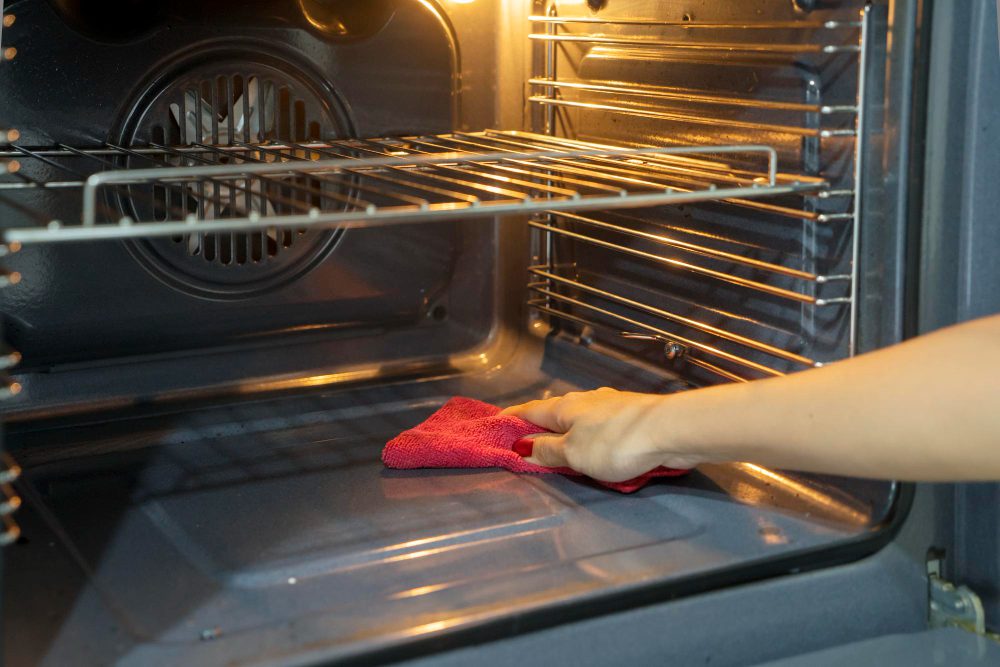
An oven can look fine from the outside while the inside tells a very different story. Grease splatters collect around the walls, crumbs burn onto the bottom, and old food residue can turn into a stubborn layer that seems impossible to remove.
If you prefer to avoid strong commercial oven cleaners, you have several gentler options. Baking soda, warm water, dish soap, and a little patience can handle a surprising amount of everyday buildup. Vinegar can also help in specific situations, but it works best as a follow-up rather than a magic ingredient that does all the work.
The right method depends on the oven, the type of mess, and whether your oven has a self-cleaning or steam-cleaning function. This guide explains how to clean an oven naturally, what actually works, what to avoid, and how to keep the oven from becoming a major project again.
Before You Clean: Check Your Oven Manual
Before putting any homemade cleaner inside your oven, check the manufacturer’s instructions.
Different ovens use different interior coatings. Some have special finishes that should not be scrubbed with abrasive materials. Self-cleaning ovens also require specific precautions, and some manufacturers recommend against using certain cleaners before or after a self-cleaning cycle.
If your oven manual says not to use baking soda, vinegar, steam, or another product on a particular surface, follow the manufacturer’s instructions instead.
Also make sure the oven is completely cool before you begin.
What You Need for Natural Oven Cleaning
A simple setup is enough for most routine oven messes:
- Baking soda
- Warm water
- Mild dish soap
- White vinegar in a spray bottle, if appropriate for your oven
- Microfiber cloths
- A non-scratch sponge
- A soft scrub brush
- An old toothbrush for corners
- A plastic scraper for stubborn residue
- Towels to protect the floor
Avoid metal blades, steel wool, and rough scouring pads unless the appliance manufacturer specifically allows them.
How to Clean an Oven Naturally With Baking Soda
Baking soda is useful because it is mildly abrasive and can help loosen greasy residue without relying on a harsh oven-cleaning formula.
Step 1: Remove the Racks
Take out all oven racks and set them aside.
This gives you room to work and prevents you from accidentally getting cleaner on the racks while scrubbing the walls.
Step 2: Remove Loose Debris
Use a dry cloth, soft brush, or handheld vacuum to remove crumbs and loose burnt food.
Do not skip this step. It is much easier to deal with baked-on grease when loose debris is already gone.
Step 3: Make a Baking Soda Paste
Mix baking soda with enough warm water to create a spreadable paste.
You want something thick enough to cling to the oven surface. It should not be watery.
For greasy areas, a few drops of dish soap can be added to the paste. Dish soap helps break down oils while the baking soda provides gentle scrubbing action.
Step 4: Apply the Paste
Spread the paste over the dirty areas of the oven interior.
Avoid heating elements, vents, light fixtures, and other components that the manufacturer says should not be coated with cleaning products.
You do not need to cover every square inch if only certain areas are dirty. Concentrate on the bottom, side walls, and spots with visible grease.
Step 5: Let It Sit
This is the part people often rush.
Give the paste several hours to work. For heavy buildup, leaving it overnight can make the next step much easier.
The goal is to soften and loosen the residue so you do not have to attack it with force.
Step 6: Wipe and Scrub Gently
Use a damp microfiber cloth or non-scratch sponge to remove the paste.
Work in small sections. If a spot does not come clean immediately, re-wet it and give it more time rather than using excessive pressure.
A soft brush or old toothbrush can help around corners and seams.
Step 7: Rinse Thoroughly
Once the baking soda paste and grease are gone, wipe the interior several times with clean water.
Baking soda residue can leave a white film if it is not fully removed. Use clean, damp microfiber cloths until the surface feels clean rather than powdery.
Step 8: Dry the Interior
Leave the oven door open for a while so the interior can dry completely.
Before using the oven again, make sure no cleaner or loose residue remains.
Can You Clean an Oven With Vinegar and Baking Soda?
Yes, but the two ingredients are often misunderstood.
When vinegar and baking soda are mixed together, they react and fizz. That reaction looks impressive, but much of the cleaning power is simply the result of the acid and base neutralizing each other.
A better approach is to use them separately when appropriate.
Start with baking soda paste to loosen grease. Once you have wiped most of it away, a light spray of diluted vinegar can help lift remaining alkaline residue. Then wipe the surface with clean water.
Do not rely on vinegar to dissolve years of baked-on grease by itself.
Also never mix vinegar with bleach or other incompatible cleaning chemicals.
How to Clean Oven Glass Naturally
The glass door is often the most noticeable part of a dirty oven.
Start by making a thin baking soda paste with water. Spread it over the glass and let it sit for about 15 to 30 minutes.
Use a soft sponge or microfiber cloth to loosen the residue. For a stubborn spot, a plastic scraper can help if your manufacturer’s instructions allow it.
Wipe the glass clean with a damp cloth, then dry it with a clean microfiber towel.
Avoid using abrasive powders or metal scrubbers. Scratches on oven glass are not worth the risk.
If grease has collected between the panes of glass, do not disassemble the door unless the manufacturer’s instructions specifically explain how to do it. Many oven doors contain springs, hinges, and seals that can be difficult to reinstall correctly.
How to Clean Oven Racks
Oven racks often need more soaking than scrubbing.
Place the racks in a bathtub, large plastic container, or another safe area that can handle water. Protect the surface if needed.
Soak the racks in warm water with dish soap. Give the residue time to soften.
After soaking, use a non-scratch sponge to remove the loosened grime. A soft brush can help around corners.
Rinse the racks thoroughly and dry them completely before putting them back into the oven.
Do not use a harsh abrasive on racks with a special finish. If the racks have become difficult to slide, check the manufacturer’s care instructions before applying oil or other products.
How to Clean a Gas Oven Naturally
Gas ovens need a little extra attention around burners and vents.
First, make sure the oven is off and completely cool. Do not allow liquid or cleaning paste to enter burner openings.
Remove loose crumbs with a soft brush or vacuum. Clean removable components according to the manufacturer’s instructions.
For the oven cavity, the baking soda paste method can work well for ordinary grease. Apply it only to areas that are safe to clean and keep it away from gas ports.
If you are unsure about a burner component or gas connection, do not experiment with it. Leave the component alone and consult the appliance manual or a qualified technician.
How to Clean an Electric Oven Naturally
Electric ovens also require care around heating elements.
Do not coat heating elements with baking soda paste or spray them with liquid unless your manufacturer’s instructions specifically permit it.
Instead, clean the oven walls and bottom carefully with a damp cloth or appropriate natural cleaner while avoiding the electrical components.
If a spill has baked onto the heating element itself, check the manual for the correct procedure. Some small residue burns away during normal use, while other situations require specific cleaning instructions.
What About Self-Cleaning Ovens?
A self-cleaning oven uses very high temperatures to burn off food residue.
That does not mean you should automatically use the self-cleaning cycle for every cleaning job. The process can produce smoke and odors, and the manufacturer may recommend specific preparation steps.
If you use the self-cleaning function:
- Remove pans, racks, and items the manual says to remove.
- Wipe out loose crumbs first.
- Keep the kitchen ventilated.
- Stay nearby while the cycle is running.
- Follow the manufacturer’s instructions exactly.
Do not use additional cleaning chemicals inside the oven before running a self-cleaning cycle unless the manufacturer specifically says you can.
What About Steam Cleaning?
Some newer ovens include a steam-cleaning function. Steam can be useful for fresh or lighter spills because moisture softens residue.
If your oven has a steam-clean setting, use it according to the manufacturer’s instructions.
If it does not, do not assume that placing any container of water inside a hot oven is automatically safe. Containers can crack, steam can cause burns, and the wrong method can damage an appliance.
Natural cleaning should never mean ignoring safety instructions.
How to Remove Burnt Food From the Bottom of an Oven
Burnt food needs patience more than force.
First remove loose pieces with a plastic scraper if permitted by the manufacturer.
Then apply a baking soda paste to the affected area and let it sit for several hours. Wipe away what has softened and repeat if necessary.
For very thick carbonized buildup, several gentle treatments are safer than one aggressive scrubbing session.
If the bottom of the oven has a special coating, follow the care instructions rather than using an abrasive scraper.
How to Remove Grease From Oven Walls
Grease responds well to dish soap because soap helps break down oils.
Add a few drops of mild dish soap to warm water and use a microfiber cloth or soft sponge. For heavier grease, follow with a baking soda paste.
Work from the top down so loosened residue does not run over areas you have already cleaned.
Rinse with clean water afterward. Leaving cleaner behind can create odors the next time you heat the oven.
Natural Oven Cleaning Mistakes to Avoid
Using Too Much Water
An oven is not a surface you should soak. Excess liquid can enter vents, electrical components, or other areas that should remain dry.
Scrubbing Too Hard
If residue is not coming off, give the cleaner more time. Excessive pressure can damage coatings.
Mixing Cleaning Chemicals
Natural products are not automatically safe when mixed. Never combine bleach with vinegar, ammonia, or other incompatible cleaners.
Cleaning a Hot Oven
Heat can make fumes stronger and can cause burns. Start with a completely cool oven.
Ignoring the Manufacturer’s Instructions
A natural cleaner is not universally safe for every oven. The appliance manual should always take priority.
How Often Should You Clean Your Oven?
There is no single schedule that works for every household.
If you cook frequently, inspect the oven every few weeks. Wipe up fresh spills once the oven is cool rather than waiting for them to burn onto the surface.
A more complete cleaning every few months is a reasonable starting point for many homes. Heavy cooking, roasting, baking, and frequent spills may require more attention.
If you notice smoke from old residue, persistent odors, or visible grease on the interior, it is time for a cleaning.
A Simple Maintenance Routine
You can prevent a deep oven clean from becoming a full-day project.
After a spill, let the oven cool and wipe it before the residue hardens.
Once a week, check the bottom and oven door for crumbs and grease.
Every few weeks, wipe the accessible interior surfaces.
Every few months, give the oven a more thorough clean based on its condition.
If the rest of your kitchen also needs attention, SHINENOS offers deep cleaning services that cover detailed kitchen work and hard-to-reach areas. You can also use our guide to deep cleaning your home when planning larger seasonal cleaning projects.
When DIY Oven Cleaning Is Not Enough
There is a point where repeated DIY cleaning becomes less practical.
If an oven has years of heavy grease, extensive baked-on carbon, or a large amount of residue across multiple surfaces, getting it back to a clean baseline can take significant time.
Professional cleaning can be useful when you are preparing for a move, getting ready to host a major event, or resetting a home after a long period without a deep clean.
SHINENOS can handle the broader kitchen cleaning around the oven as part of a professional deep clean, so you are not spending an entire weekend working through appliances, cabinets, counters, floors, and bathrooms one task at a time.
Frequently Asked Questions
What is the best natural cleaner for an oven?
For many ovens, a baking soda and water paste is a practical natural option for loosening grease and baked-on residue. Always check the manufacturer’s instructions before using it.
Can I use vinegar to clean my oven?
Vinegar can help remove residue and odors, but it is not usually strong enough to handle heavy baked-on grease by itself. Use it only when appropriate for your oven’s materials and care instructions.
How long should baking soda sit in an oven?
For light buildup, 15 to 30 minutes may help. Heavy grease can benefit from several hours or an overnight application, provided the method is safe for the oven’s interior finish.
Can I use baking soda on the oven glass?
Baking soda can work on many oven glass surfaces, but avoid aggressive scrubbing. Check your appliance instructions first and use a soft cloth or sponge.
How do I clean an oven without chemicals?
You can use simple ingredients such as baking soda, water, and mild dish soap for many routine cleaning tasks. “Natural” does not mean every surface can be treated the same way, so always check the appliance manual.
How do I stop my oven from smelling after cleaning?
Rinse the interior thoroughly and allow it to dry. Any leftover cleaner or baking soda can create an odor when heated. If the smell continues, check for hidden grease or residue.
Final Takeaway
Learning how to clean an oven naturally is mostly about using a gentle method and giving the cleaner enough time to work. Baking soda can loosen grease, dish soap can break down oily residue, and careful wiping can remove the mess without relying on harsh products.
The key is not to rush. Protect the heating elements and vents, avoid abrasive tools, follow your oven manufacturer’s instructions, and clean small spills before they become baked-on problems.
When the oven is only one part of a kitchen that needs a reset, book a cleaning service with SHINENOS and let a professional team handle the job.